



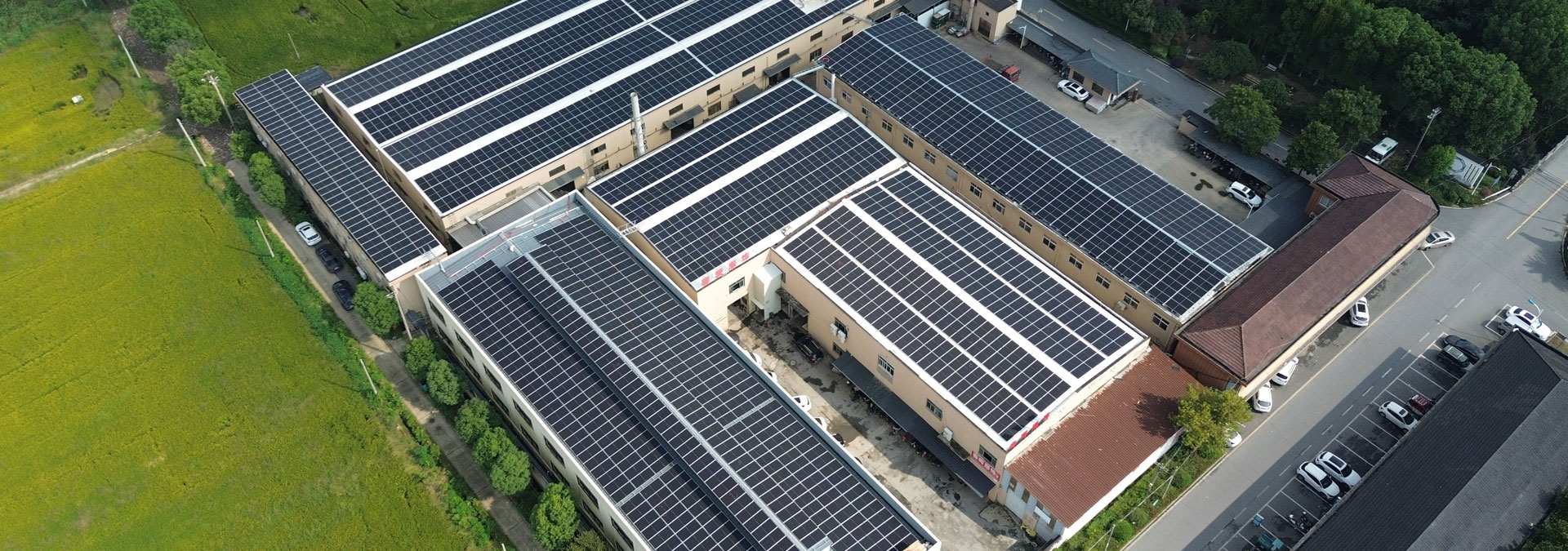
The roof tiles industry is moving through a quiet shift. Production lines that once relied on manual observation and routine adjustments are now guided by digital systems and connected processes. This transition is not sudden or disruptive in appearance. It feels gradual. Yet the impact is clear. Factories are changing how they plan, produce, and respond to demand.
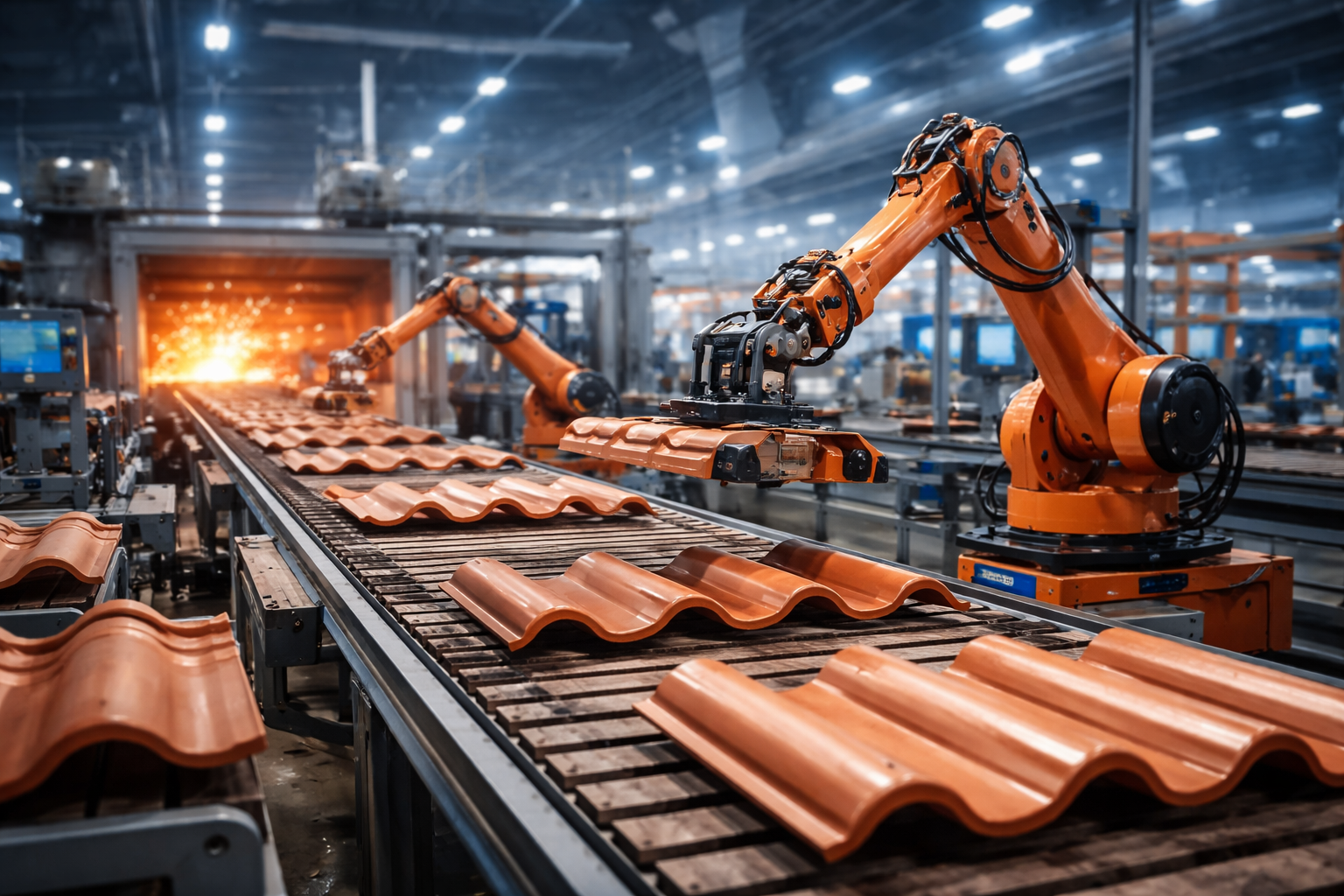
Smart manufacturing in roof tile production is not limited to machines. It involves how information flows across the workshop, how decisions are made, and how quality is observed in real time. The idea centers on coordination. Materials, equipment, and operators interact through systems that aim to reduce uncertainty and improve consistency.
The growing interest in this model reflects changes in construction demand. Builders expect stable supply, flexible design options, and reliable product performance. Roof tile producers are adjusting their processes to meet these expectations while managing cost pressure and environmental considerations.
What defines smart manufacturing in Chinese Roof Tiles production?
Smart manufacturing in roof tile production brings together traditional craftsmanship and digital tools. The fundamental steps of shaping, drying, and finishing the tiles stay essentially the same. What changes is the way each stage is watched and managed.
Sensors are installed at key points along the production line. They continuously measure variables like temperature, moisture content, and material movement. The information gathered is shared across connected systems that look for patterns and recommend adjustments in real time. Operators get clear feedback right away, so they can act before small issues turn into defects.
Control systems work to keep conditions steady throughout the process. When variations appear, the systems respond smoothly and precisely. This helps cut down on waste and avoids repeated corrections later on.
The purpose is not to remove human involvement. Instead, it supports skilled workers by giving them accurate, timely information to make better decisions.
Another important aspect is connectivity. Different machines and sections of the plant can communicate with each other. A change in one area can be automatically reflected in the next stage. This coordination helps keep the entire production line balanced and running efficiently.
How are traditional processes being reshaped?
Traditional roof tile production follows a well-established sequence: preparing raw materials, forming them into the desired shape, and then processing them under controlled conditions. Smart manufacturing does not replace these fundamental steps. It reshapes the way they are carried out and managed.
- Material Preparation: Digital systems now provide closer tracking of raw material consistency. Any variations are spotted early, before they can influence later stages. This leads to less rework and greater efficiency.
- Shaping Processes: Automated systems guide the forming stage with small, real-time adjustments to pressure and movement. The focus is on keeping each tile as close as possible to the target specifications.
- Drying and Finishing Stages: Monitoring tools continuously observe conditions in these phases. Adjustments are made quickly whenever changes in the environment or process occur. This helps deliver more consistent and stable results.
The overall effect is a smoother production flow. Interruptions become less common, and operators can spend more of their time watching trends and making thoughtful decisions instead of constantly fixing unexpected issues.
Why is data becoming central to production decisions?
Data has become a central element in production decisions for roof tile manufacturing. It gives a clear and continuous view of what is happening at each stage of the process. Instead of relying on occasional manual checks, the factory can now monitor conditions in real time.
This shift changes the way decisions are made on the floor. Operators no longer depend only on experience or standard routines. They now have access to accurate, current information that shows exactly what is happening. This allows them to act with more confidence and precision.
Data also strengthens planning throughout the operation. Production schedules can be adjusted based on actual performance rather than guesses or estimates. Maintenance can be scheduled before problems become serious. This helps avoid unexpected downtime and keeps the production line more reliable.
The increased use of data does not replace human judgment. It works alongside it. Experienced operators and their knowledge of materials and processes remain essential. Their expertise helps interpret the data and guides the final decisions.
Can automation improve flexibility in design?
Automation can bring meaningful improvements to flexibility in roof tile design and production. For a long time, roof tiles were manufactured in only a limited selection of standard shapes, sizes, and finishes. Nowadays, architectural styles and client demands continue to change. Builders and architects often seek tiles that align with specific building aesthetics, suit regional climates, or match unique design visions. Smart manufacturing helps meet these needs by making the entire production process far more adaptable.
Automated systems enable factories to transition from one tile design to another with very little interruption or slowdown. Rather than stopping the production line for lengthy manual reconfigurations, operators can simply adjust settings through digital controls and saved programs. This allows the same line to produce a variety of shapes, textures, and finishes while maintaining good overall efficiency.
As a result, creating custom or specialized tiles has become much more practical and cost-effective. Small batches of distinctive designs can be manufactured without significantly affecting the regular production flow. Manufacturers now have greater ability to address a broader range of market requests — from standard tiles for large housing developments to tailored solutions for individual architectural projects.
Importantly, this kind of flexibility does not involve adding unnecessary complexity. It is about the capacity to adapt production efficiently and reliably whenever required, all while preserving consistent quality. Smart systems support these adjustments in a controlled and stable manner, ensuring that changes in design do not disturb the smooth operation or output of the production line.
How does smart manufacturing influence quality control?
Smart manufacturing is changing how quality control is handled in roof tile production. Quality has always mattered because even small differences in shape, color, texture, or strength can affect how well the tiles perform and how they look after installation. In traditional methods, quality checks often depended on taking samples from batches at certain points. Smart manufacturing moves away from this by enabling continuous observation throughout the entire line.
- Continuous Monitoring: Sensors and imaging systems track each tile as it goes through the different stages. This means irregularities such as cracks, uneven surfaces, or color variations can be spotted much earlier in the process.
- Early Detection and Adjustments: When an issue is detected, the system allows for quick corrections to temperature, pressure, moisture, or other settings. This helps stop problems from spreading through a whole batch and reduces the amount of waste.
- Quality Control as Part of the Process: Instead of being a separate final check at the end, quality control becomes integrated into the daily production flow. The systems help keep consistency high without slowing down the line.
- Support for Operators: Operators get clear alerts and useful information that point them toward areas that need attention. This makes their role more targeted and effective, rather than depending only on manual inspections or routine sampling.
This way of working reduces the reliance on final inspection alone. It builds a more balanced approach where prevention and early detection work together with human oversight, leading to more reliable quality and fewer defects reaching the end of the line.
What role does workforce adaptation play?
Workforce adaptation plays a key role in the successful transition to smart manufacturing in roof tile production. As automated systems take over tasks that once needed constant manual intervention, the daily work of operators changes significantly.
Workers now spend more time on supervision and analysis rather than hands-on adjustments at every step. They interact with digital interfaces that show real-time data from sensors and control systems. Because of this, training becomes essential. Operators need to develop a good understanding of both the traditional physical process — such as how materials behave during shaping and drying — and the new digital tools that monitor and guide production.
This shift does not diminish the importance of human involvement. It simply changes the nature of that involvement. Experienced workers remain highly valuable because they can interpret data patterns, recognize subtle signs that automated systems might miss, and make thoughtful decisions in unusual or complex situations.
As a result, collaboration between teams becomes smoother and more effective. Information flows more easily across departments, helping production, maintenance, and quality control work together more closely and respond to issues in a coordinated way.
Is environmental consideration shaping production methods?
Environmental considerations are becoming more important in shaping roof tile production. With growing awareness of resource consumption and environmental impact, smart manufacturing gives factories practical tools to handle these issues more effectively and responsibly.
Energy use is now monitored in real time at different stages of the production line. The systems can quickly highlight areas where energy is being wasted and allow operators to make prompt adjustments. This helps lower the plant's overall energy consumption while keeping output steady and reliable.
Material usage is tracked with higher precision as well. By maintaining better control over mixing ratios, shaping pressure, and drying conditions, manufacturers can significantly reduce waste and use raw materials more efficiently. Less scrap means resources are managed more carefully from the very beginning to the end of the process.
Factories are also focusing more on emissions and by-products. Continuous monitoring helps keep operating conditions within acceptable environmental limits. This allows them to meet sustainability requirements without major disruptions to daily production.
In the end, this way of working helps bring production methods in line with the increasing demand for more responsible and sustainable manufacturing practices.
How are supply chains connecting with smart factories?
Smart manufacturing is also changing how supply chains connect with roof tile production. The influence of these technologies reaches well beyond the factory floor, creating tighter links between suppliers, manufacturers, and customers through better information flow.
Production schedules can now be adjusted more easily based on actual material availability from suppliers. Delivery timelines become clearer and more predictable, which reduces uncertainty and planning difficulties for everyone involved.
Communication across the supply chain improves because systems can share relevant data in a more seamless way. Orders can be tracked with greater accuracy, and shifts in customer demand can be reflected more quickly in production plans.
This increased connectivity helps build a more responsive supply chain overall. Manufacturers gain the ability to adapt to changes in material supply or market demand without causing major disruptions to their operations.
What challenges are emerging during this transition?
The shift toward smart manufacturing is not without difficulty. Integrating new systems with existing processes can be complex. Factories must balance continuity with change.
Training requirements can be significant. Workers need time to adapt to new tools and methods. This requires careful planning and support.
Initial investment is another consideration. While long-term benefits may be expected, the transition phase requires resources. Companies must evaluate how to implement changes in a sustainable way.
There is also the question of data management. Collecting information is one part. Interpreting it effectively is another. Systems must be designed to present useful insights without overwhelming users.
Despite these challenges, the direction remains steady. The industry continues to explore how digital tools can support practical production needs.
A brief comparison of traditional and smart approaches
| Aspect | Traditional Approach | Smart Manufacturing Approach |
|---|---|---|
| Process control | Manual adjustments | Automated and data-guided |
| Quality inspection | Periodic sampling | Continuous monitoring |
| Production flexibility | Limited variation | Adaptable configurations |
| Information flow | Isolated data | Connected systems |
| Maintenance | Reactive | Predictive awareness |
The movement toward smart manufacturing in roof tile production reflects a broader change in industrial thinking. It focuses on coordination, observation, and adaptability. The process becomes more transparent. Decisions are informed by real-time insight rather than delayed feedback.
Factories are not abandoning traditional knowledge. They are integrating it with new tools. This combination shapes a production environment that feels both familiar and evolving.

 Email:
 Phone:
 Adress: