



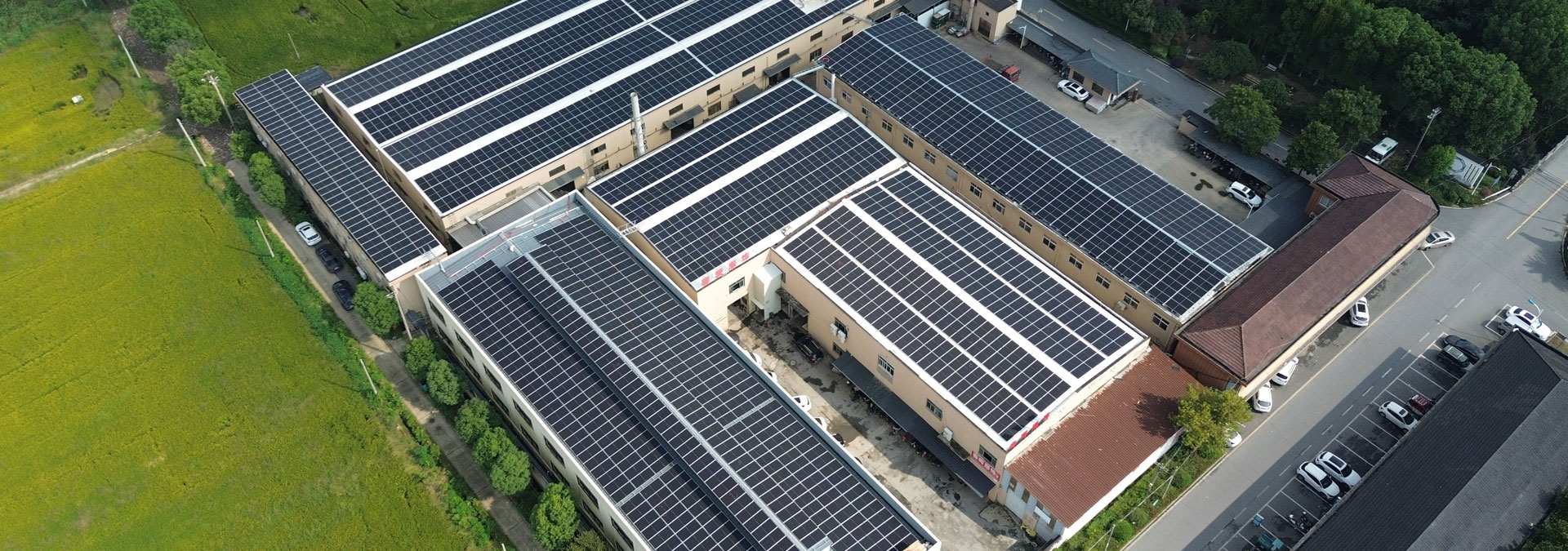
In many industrial areas, roof tile factories run with a quiet sense of order. From the outside, the buildings may seem still. Inside, the day unfolds through a steady sequence of tasks. Nothing feels rushed, yet nothing stands still for long. Materials move, machines turn, and workers shift their attention from one stage to another.
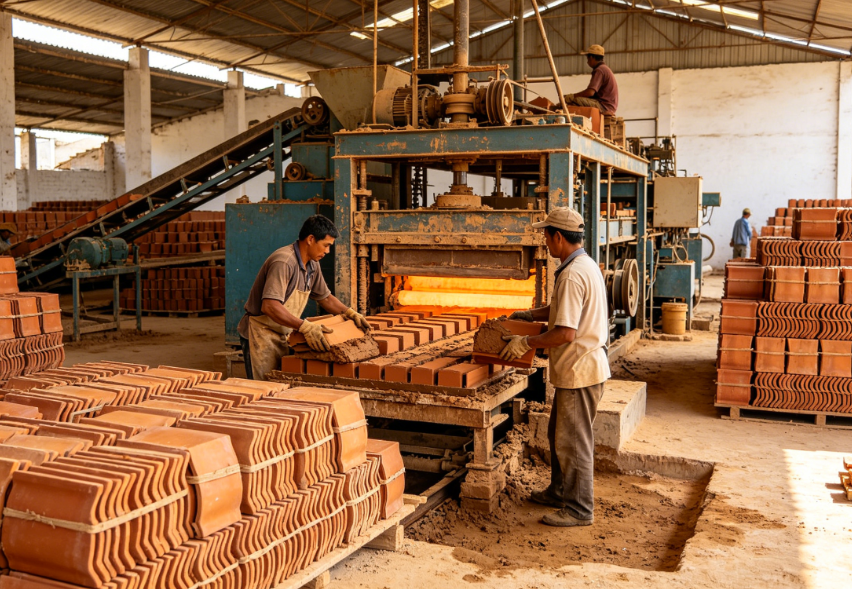
A typical day is shaped by routine, but it is not rigid. Small changes happen all the time. People adjust, machines respond, and the flow continues. To understand how these factories operate, it helps to follow the path of materials as they move through the space.
What does the start of a working day look like?
The day often begins before the main production line is fully active. Workers arrive and move through the workshop, checking tools and equipment. There is a quiet period where attention is focused on preparation.
Machines are not started all at once. Each section is checked in turn. A loose part, a blocked path, or a small buildup of material can affect how the system runs later. These early checks are simple but important.
At the same time, raw materials are brought closer to the production area. Some may have been stored overnight. Their condition is observed. If something feels off, adjustments are made before production begins.
As the first machines start, the sound in the workshop changes. It builds gradually. One section begins, then another follows. Soon, the whole line is in motion.
How are raw materials managed during the day?
Raw materials do not move randomly through the factory. Their path is planned, even if it looks natural from the outside.
They are fed into the system in a controlled way. Too much at once can disrupt the shaping process. Too little can slow everything down. Workers often adjust the flow based on how the line is performing.
The condition of the material can change during the day. Air moisture, temperature, and storage time all have an effect. These changes are not always obvious, but experienced workers notice them.
Sometimes a small adjustment is enough. A slight change in how material is fed into the system can bring things back into balance. These corrections happen quietly, without stopping the entire process.
How does the shaping stage actually work?
Shaping is where loose material begins to look like a roof tile. It is one of the more visible parts of the process.
Material is guided into molds or forming sections. These give it a defined shape. The movement is steady, not fast. Each piece follows the same path, one after another.
Even though the process repeats, it does not run on its own. Workers keep an eye on the output. If something looks uneven, they step in. The adjustment may be small, but it can make a difference.
Freshly shaped tiles are still soft. They hold their form, but they need careful handling. They are moved forward on supports that keep them stable.
There is no pause between pieces. The shaping stage works like a stream, not a series of separate steps.
Why is drying such a sensitive part of the process?
After shaping, the tiles contain moisture that needs to be reduced. This stage takes time. It cannot be rushed without causing problems.
Tiles are placed in areas where air can move around them. Sometimes this happens in open spaces. In other cases, it takes place in enclosed sections designed for this purpose.
Drying is less about action and more about balance. If one side dries faster than the other, the tile can change shape. Workers watch for these differences and adjust spacing or position if needed.
The pace of this stage depends on the environment. Warm air, cool air, and airflow all play a role. These conditions can shift during the day, so the process is not fixed.
While drying happens, other parts of the factory continue to run. New tiles enter the system as others move closer to completion.
What happens during finishing?
Once tiles have dried enough to hold their shape, they move into the finishing area. This stage focuses on small details.
Edges may be trimmed. Surfaces may be smoothed. In some cases, coatings are applied to change the appearance or surface feel.
Workers often rely on quick visual checks. They look for irregular shapes, rough spots, or slight differences between pieces. These checks happen in passing, without stopping the line.
If a tile does not meet expectations, it is set aside. This does not interrupt the rest of the process. The system continues while attention shifts briefly to the issue.
Finishing gives the tile its final form. After this stage, it is ready to be handled more freely.
How is quality control handled during daily work?
Quality control is not limited to one point in the process. It happens all the way through.
During material feeding, workers watch how the material behaves. During shaping, they observe form and consistency. During drying, they look for changes in structure. Each stage offers clues.
This approach allows problems to be noticed early. A small issue can be corrected before it spreads through the rest of the production line.
Most of this work is informal. It depends on attention rather than strict procedures. Workers rely on what they see, hear, and sometimes even feel.
A change in sound or movement can signal that something needs adjustment. These signals are often subtle, but they are part of the daily routine.
What role do packaging and storage play?
Right after tiles come off the production line, they are sorted and stored before being shipped out. This part connects factory production with final customer delivery.
Workers stack tiles neatly to make moving them easier, and simple packaging keeps them safe during transit. The goal is solid protection without over‑complicated extra steps.
Storage areas are arranged in order. Tiles are grouped by design or shipping location, so orders can be pulled and packed quickly.
Both workers and automated machines move tiles around this area non‑stop, keeping the whole process running smoothly. Stock records are updated as tiles are stored, so the factory always keeps track of available stock and where each batch is placed.
How do workers and machines share the workload?
Tile production relies on both machines and on‑site workers. Machines handle steady, repetitive motions consistently, while people keep an eye on real‑time conditions and make practical calls.
Machines run on autopilot for most of the time, and staff only step in to guide or adjust things when necessary. This division of work changes all day long as production goes on.
Factory floors are usually loud, so people communicate in quick, simple ways. A quick look, hand gesture or short verbal check works far better than long explanations.
After working on the line for a while, workers get used to the production pace. They learn when to step in and when to let machines do their job.
What kinds of issues appear during the day?
Even with a regular, stable production flow, small daily troubles are common and unavoidable.
Common minor problems include:
- Raw materials acting differently from normal
- Slight misalignment when tiles are shaped
- Uneven drying caused by changing air flow
- Wear on moving machine parts
- Interruptions in the raw material supply
Most of these can be sorted out quickly without stopping the whole production line, with small fixes applied while work carries on.
Some issues don't have an obvious cause straight away. Workers watch closely, try simple adjustments and check the results little by little. Though this takes some time, it usually leads to a stable long‑term fix.
How is a steady workflow maintained?
A Roof Tile Factory depends on balance. Each stage must match the pace of the others.
If shaping moves too fast, drying areas can become crowded. If drying slows down, finished tiles may not be ready when needed. Keeping the flow even is part of the daily task.
Workers watch the system as a whole. They do not focus on one section alone. Small adjustments in one area can help stabilize another.
Below is a simple view of how stages connect:
| Stage | Main Focus | Flow Style |
|---|---|---|
| Material feeding | Controlled input | Continuous |
| Shaping | Form creation | Steady |
| Drying | Moisture balance | Slower |
| Finishing | Surface detail | Moderate |
| Storage | Organization | Structured |
This connection between stages creates a rhythm that carries through the entire day.
How does the environment affect daily operations?
The environment inside and outside the factory has a quiet influence on how work is done.
Temperature can affect how materials behave. Air movement can change how quickly tiles dry. Even lighting can influence how easily workers spot small differences.
These factors are not always controlled in a strict way. Instead, workers adapt to them. Over time, they learn how conditions affect the process.
A change in weather may lead to small adjustments inside the factory. These changes are part of the routine rather than interruptions.
How does the day unfold over time?
As the day continues, the factory settles into its rhythm. Materials enter, move through each stage, and leave as finished tiles.
There are moments when activity increases. A batch may be moved, or a section may need adjustment. There are also periods when the system runs smoothly with little change.
Short pauses may happen for checks or cleaning. These are part of keeping the process stable. They do not break the flow for long.
Toward the later part of the day, attention often shifts slightly. Workers organize finished tiles, prepare storage areas, and make sure everything is in order.
Even as production slows, preparation for the next cycle begins quietly in the background.

 Email:
 Phone:
 Adress: