




Ancient Chinese roof tiles are easy to overlook when viewed from a distance. A traditional roof can appear to be a simple arrangement of repeated pieces, but closer inspection reveals a rich visual language. Curved surfaces, decorative ends, geometric borders, and symbolic motifs can turn a practical roof covering into part of a building's identity.
The patterns found on Chinese roof tiles were not selected only for appearance. Many reflected ideas about protection, good fortune, social order, nature, and cultural beliefs. The meaning could also change according to the building, period, region, and decorative tradition.

This makes roof tile patterns an interesting subject for today's architectural and restoration industries. Designers working with traditional-style buildings often look beyond the shape of a tile. They consider what its pattern communicates and how that visual detail interacts with the rest of the roof.
Ancient Chinese Roof Tiles therefore sit at an unusual point between construction and cultural expression. Their surfaces can tell stories even when the buildings around them have changed.
Why Did Ancient Chinese Roof Tiles Carry Decorative Patterns?
A roof has a practical role. It protects the building from weather and helps create a finished architectural form. Decorative tiles add another layer to that function.
The visible ends of roof tiles offered a natural place for decoration. Repeated elements could create rhythm along an eave. A pattern could also make a building easier to recognize from a distance.
Traditional Chinese architecture placed considerable attention on the relationship between structure and appearance. Rooflines, eaves, courtyards, doors, windows, and decorative details were often designed as parts of a larger visual system.
Roof tile patterns fitted into this system.
Common decorative ideas included:
- Geometric motifs, which created order and repetition.
- Plant motifs, which connected buildings with ideas of nature and growth.
- Animal motifs, which could suggest protection, strength, or good fortune.
- Cloud-related forms, which often carried associations with the heavens and natural forces.
- Symbolic characters, which could express wishes or cultural ideas.
The exact meaning should not be treated as universal. A similar motif could have different interpretations depending on its context.
This is one reason researchers and restoration specialists pay attention to the complete architectural setting rather than looking at a single tile in isolation.
What Do Geometric Patterns Represent?
Geometric patterns are among the most recognizable forms found in traditional roof decoration.
Circles, lines, repeating borders, and symmetrical arrangements could give a roof a sense of visual order. Their appeal was not necessarily based on a single symbolic meaning. Repetition itself could communicate balance and harmony.
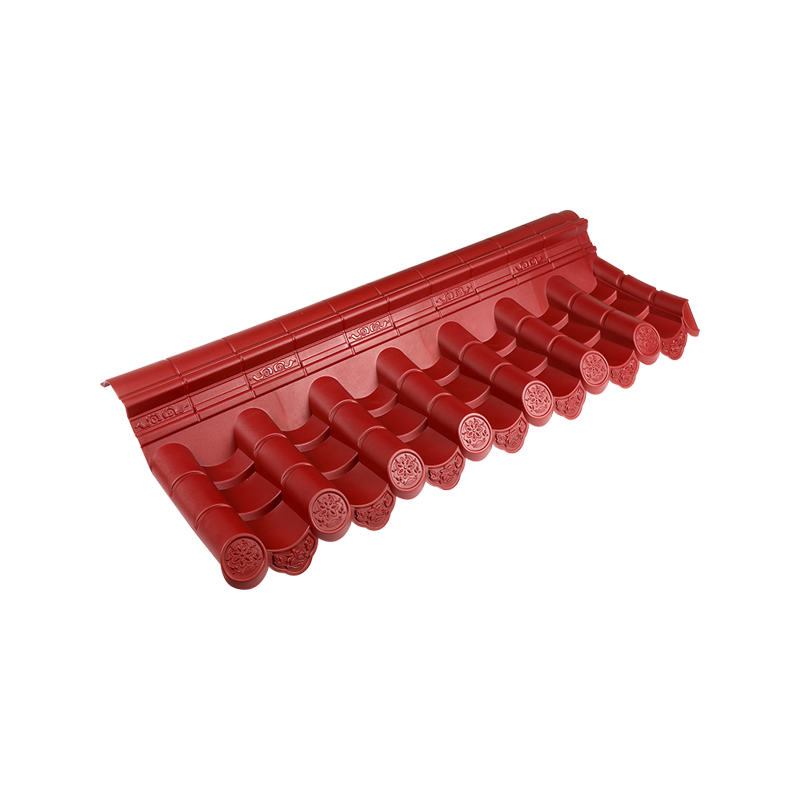
Circular patterns are especially interesting. The circle has long appeared in Chinese decorative traditions and can suggest ideas such as completeness or continuity. When placed on the exposed end of a roof tile, the shape also creates a clear visual focus.
Other patterns rely on repetition.
A repeated border can guide the eye along the roofline. It can make separate tiles appear to belong to one continuous design. This is particularly important when a building contains many small decorative elements.
Geometric decoration can therefore work on two levels.
At a symbolic level, it may carry ideas associated with balance or continuity. At a visual level, it helps organize the building's appearance.
That combination is part of what makes ancient Chinese roof tile design useful for architectural study today.
How Are Animal Motifs Connected With Traditional Beliefs?
Animal imagery appears frequently in traditional Chinese art and architecture. Roof tiles were one of many surfaces where these motifs could be expressed.
Some animals were associated with positive qualities. Dragons, for example, have a long history in Chinese culture and can be connected with power, authority, water, and the heavens. Phoenix imagery has been associated with harmony, renewal, and auspicious ideas in traditional symbolism.
Other creatures could have protective associations.
The meaning depended heavily on context. A decorative animal on a roof did not always have one fixed interpretation. Its role could be influenced by the type of building, the surrounding decorations, and the broader artistic tradition.
This matters when discussing Ancient Chinese Roof Tiles because it is easy to reduce a complex visual tradition to a simple list of symbols.
The better approach is to ask what the motif contributes to the building.
An animal image might:
- Add a sense of protection.
- Express a cultural ideal.
- Indicate a connection with traditional beliefs.
- Give the roof a distinctive visual character.
- Connect the building with a wider decorative tradition.
The roof then becomes more than a collection of functional pieces. Its decoration participates in the identity of the structure.
What Do Plant and Flower Patterns Suggest?
Plant motifs bring a different quality to traditional roof decoration.
Flowers, leaves, vines, and related forms can suggest growth, renewal, beauty, and natural balance. They also provide designers with shapes that can be adapted to repeated decorative surfaces.
The lotus is a particularly recognizable example in Chinese visual culture. It has associations with purity and spiritual traditions. Other flowers can carry meanings connected with prosperity, longevity, beauty, or seasonal change.
Yet plant motifs were not always used because of a specific symbolic message.
Sometimes their appeal came from their shape.
Curving leaves and petals work well with decorative borders. Repeated stems can create movement. Symmetrical flowers can fill circular or rectangular spaces without making the design feel crowded.
This shows how symbolism and visual design often worked together.
A craftsman could select a motif because it had cultural meaning and because its shape suited the surface. The decorative result could communicate an idea while also improving the rhythm of the roof.
| Pattern Type | Possible Cultural Association | Visual Role |
|---|---|---|
| Circular motifs | Completeness or continuity | Creates a strong central shape |
| Floral motifs | Growth, beauty, or renewal | Adds natural forms |
| Cloud motifs | Nature and the heavens | Creates flowing movement |
| Animal motifs | Protection, power, or good fortune | Gives the roof symbolic character |
| Geometric borders | Order and balance | Creates repetition along the roofline |
These associations are broad rather than fixed rules. Historical interpretation needs to consider the specific building and decorative context.
Why Do Cloud Patterns Appear in Traditional Roof Decoration?
Cloud motifs are another important part of traditional Chinese decorative art.
Their flowing shapes contrast with the hard surfaces of architectural materials. A roof made from repeated tiles can otherwise appear rigid. Curved cloud patterns introduce movement.
Cloud imagery also has strong connections with traditional ideas about the natural and heavenly worlds.
In decorative design, cloud forms can appear as curling lines, layered shapes, or repeated flowing elements. They can be combined with animals, flowers, or other motifs.
Their flexibility makes them suitable for architectural decoration.
A cloud pattern can frame another image. It can fill an empty area. It can create a transition between different decorative sections.
There is also an interesting visual relationship between cloud patterns and the shape of traditional roofs.
Many Chinese roofs use sweeping curves and pronounced eaves. Flowing decorative motifs can echo those architectural lines. The result is a visual connection between the roof's overall form and its smaller details.
This helps explain why decorative patterns should not be viewed separately from the architecture.
The motif and the roof often work together.
Could Roof Tile Patterns Reflect Social Status?
Decoration could also communicate information about a building's importance.
Traditional Chinese architecture developed within a social system where different buildings could have different levels of decorative complexity. Certain motifs, colors, and architectural forms could be associated with particular functions or social positions.
Roof decoration was part of this broader visual language.
A more elaborate roof could attract attention and create a stronger sense of formality. A simpler design could communicate a different character.
This does not mean that every decorative tile can be used to identify the exact status of a building. Historical buildings changed over time, and regional traditions varied.
Still, the relationship between decoration and social meaning is an important area of architectural interpretation.
For modern designers, this provides an interesting lesson.
Traditional-style architecture does not need to use decoration simply because decoration looks attractive. The choice of a pattern can help communicate what kind of space a building is intended to represent.
A cultural center, garden structure, heritage-inspired residence, and ceremonial building may all use traditional roof forms, yet their decorative language can differ.
Roof tiles can participate in that distinction.
How Did Regional Traditions Influence Roof Tile Patterns?
China's architectural traditions developed across a large and varied landscape.
Local climate, materials, craftsmanship, cultural practices, and building traditions could influence roof construction and decoration. As a result, ancient roof tiles should not be treated as one uniform design category.
Different regions developed different visual preferences.
Some areas became known for particular roof shapes or decorative styles. Local craftspeople could adapt familiar motifs to suit regional traditions. Even when two patterns shared a general theme, their execution could look quite different.
This regional character creates an important challenge for restoration work.
Replacing an old tile with a visually similar piece does not always recreate the original architectural language. The shape may appear correct, but the decorative details may belong to a different tradition.
Restoration therefore involves more than finding something that looks old.
It can involve examining:
- The original roof form.
- Local decorative traditions.
- Existing tile patterns.
- The building's function.
- Nearby architectural details.
- The relationship between the roof and other ornamentation.
This approach helps preserve the character of the building rather than simply reproducing an old-fashioned appearance.
Can Ancient Chinese Roof Tile Patterns Influence Modern Architecture?
Traditional roof tile patterns are now attracting attention beyond heritage restoration.
Modern architects and designers working with cultural or traditional-style buildings can draw inspiration from historical motifs without copying an entire ancient structure.
A geometric tile pattern might inspire a modern facade. A cloud motif could become a decorative border. A floral design might appear in landscape architecture or interior details.
The important point is interpretation.
Modern architecture does not necessarily need to reproduce every historical detail. Designers can study how traditional patterns create rhythm, balance, symbolism, and visual identity.
This can lead to more selective use of traditional elements.
For example, a modern building might use a simplified roof tile pattern while keeping a contemporary structure. Another project might use traditional decorative tiles around an entrance or courtyard rather than covering the entire building.
Such approaches allow traditional imagery to remain recognizable without making every building look identical.
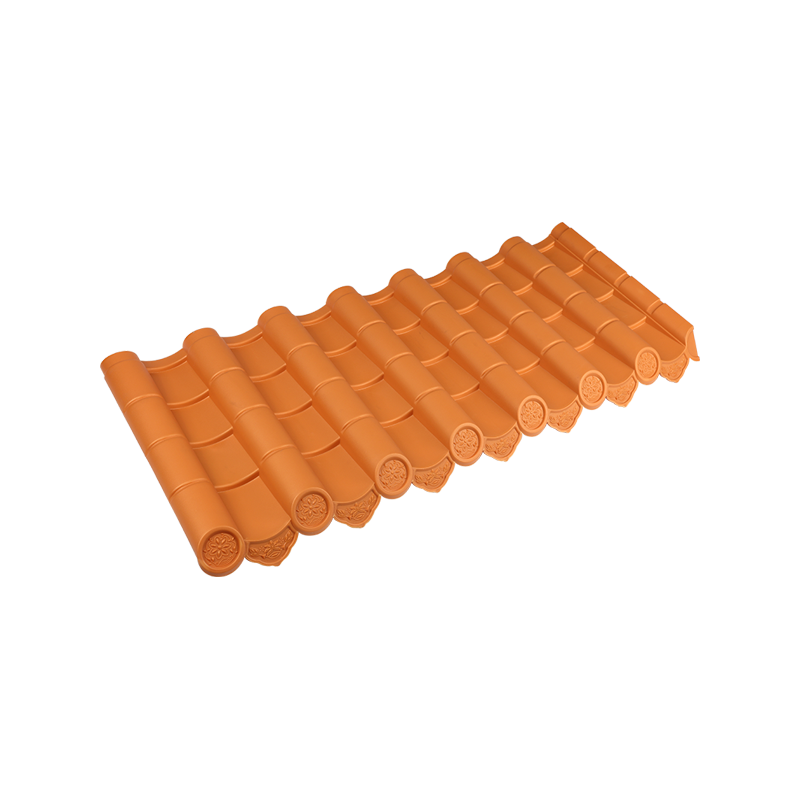
The same idea can apply to manufactured roofing products.
Modern production methods can reproduce familiar forms, but the design process still needs to consider whether the selected pattern fits the architectural context.
A roof tile is not an isolated decoration.
Its shape, color, texture, repetition, and position all affect how the building is perceived.
What Should Designers Consider When Using Traditional Roof Tile Patterns?
The growing interest in traditional architectural elements creates opportunities, but it also calls for careful design decisions.
A pattern may have cultural meaning that is not immediately obvious to a modern audience. Using it without understanding its context can weaken the connection between the decoration and the building.
Designers can consider several practical questions:
1. What does the motif communicate?
A pattern should have a reason for being there. Understanding its traditional association can help prevent random decoration.
2. Does it suit the building?
A roof pattern should relate to the building's scale, purpose, and architectural style.
3. Is the design historically appropriate?
For restoration projects, accuracy matters more than simply creating an "ancient" appearance.
4. Can the pattern be adapted without losing its character?
Modern projects may require a simpler interpretation. The key visual qualities can sometimes be retained without reproducing every historical detail.
5. Does the roof work as a complete composition?
Individual tiles are only small parts of the finished roof. The eaves, roofline, walls, windows, and surrounding landscape all influence the final result.
This way of thinking shifts attention from individual decorative objects toward the larger architectural experience.
Ancient Chinese Roof Tiles remain relevant because their patterns demonstrate how practical building elements can also carry visual and cultural meaning. A repeated circle can suggest continuity. A flower can introduce ideas of nature. A cloud can create movement. An animal motif can bring a sense of symbolism to an otherwise functional surface.
For restoration specialists, these details can provide clues about a building's character. For contemporary designers, they offer a source of visual ideas. For manufacturers, they show why traditional roofing products involve more than shape and material.
The pattern on a small tile can become part of a much larger architectural story.



 Email:
 Phone:
 Adress: