



What Makes a Roofing Material Easy to Install?
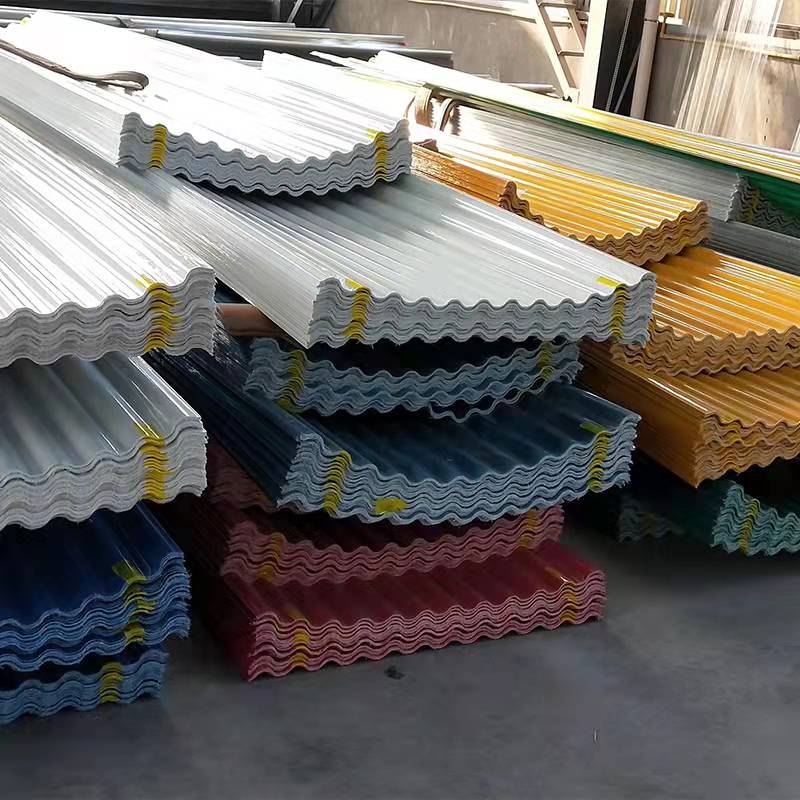
Easy-to-install roofing materials are designed for efficiency. They simplify the construction process. They reduce labor time and allow for quicker completion.Lightweight materials are often easier to handle. Modular or interlocking designs eliminate complex alignment. Many come in panels or sheets that fit together without specialized tools.
Ease of installation also means fewer errors. Consistency in placement reduces the risk of leaks or structural issues. Homeowners can attempt DIY installations, and contractors can work faster with fewer resources.Installation convenience does not mean compromise. Many materials balance simplicity with durability and aesthetic appeal.
What Are the Popular Types of Easy-to-Install Roofing Materials?
Several categories dominate the market. Each offers unique features for speed, cost, and performance.
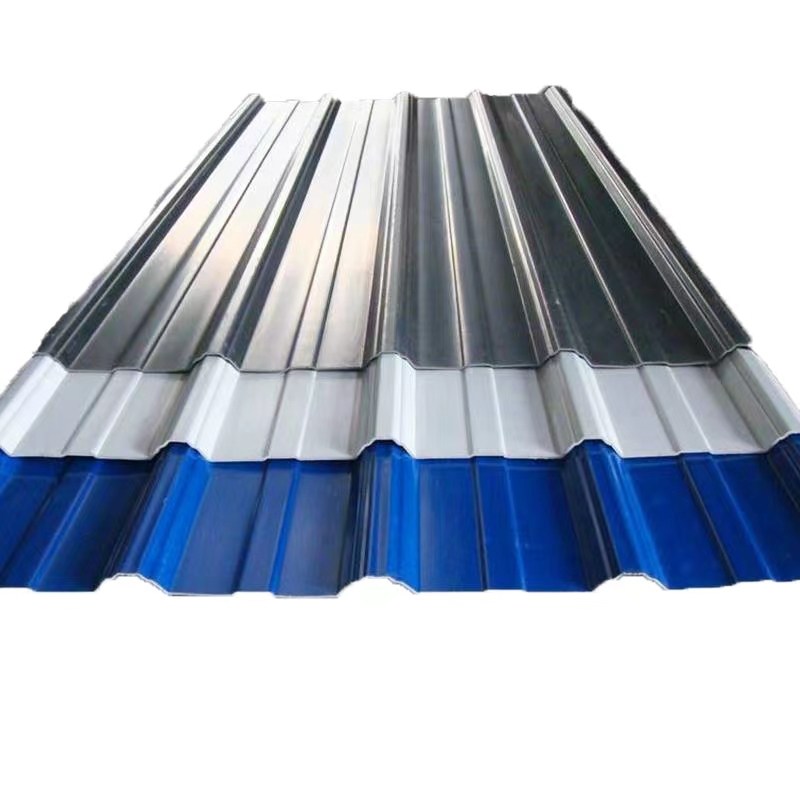
1. Metal Roofing Panels
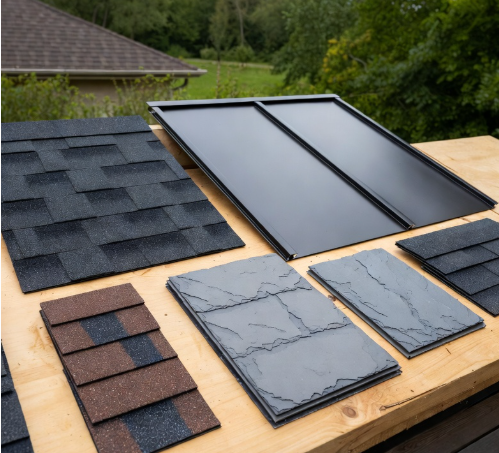
Metal panels are lightweight and often come with interlocking edges. They snap into place quickly and provide a durable surface. Modern coatings enhance corrosion resistance and maintain appearance.
2. Asphalt or Composite Shingles
These shingles are commonly used for residential projects. Pre-cut and flexible, they lay flat on a roof deck. Installation can be done in layers, which speeds up the process and reduces waste.
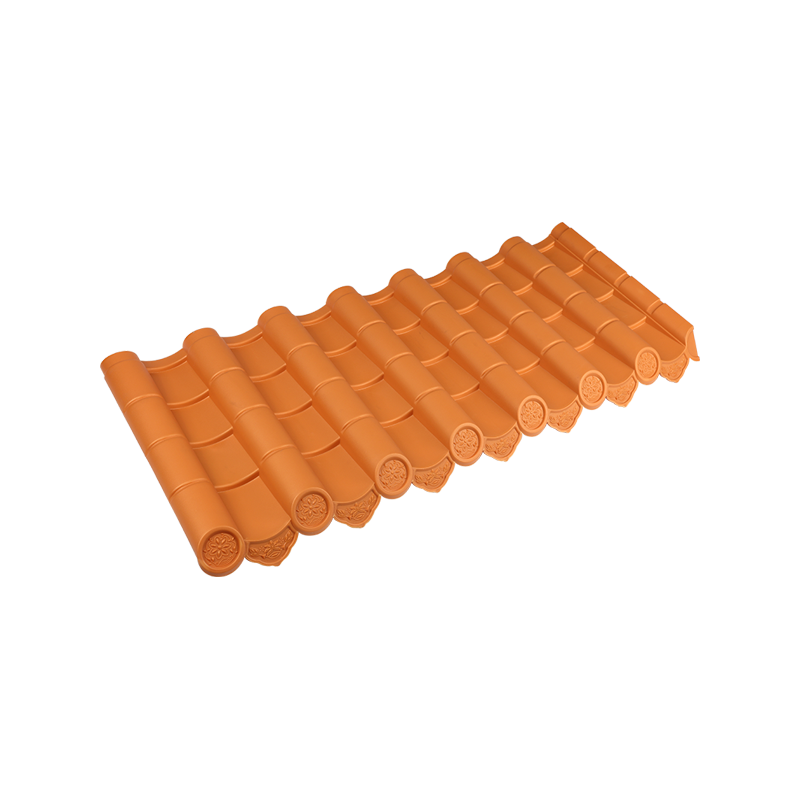
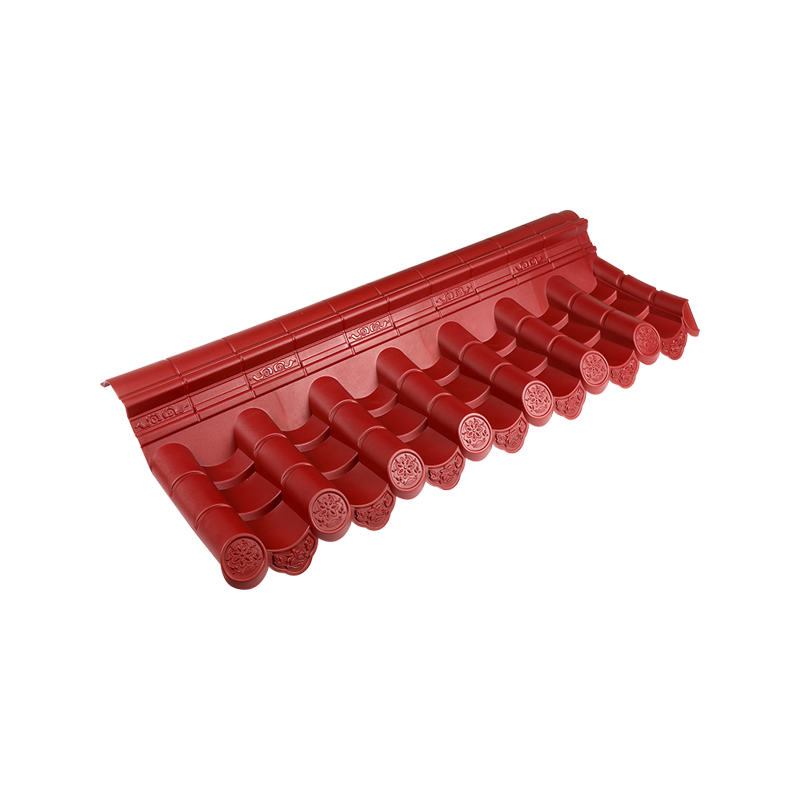
3. Synthetic Roofing Tiles
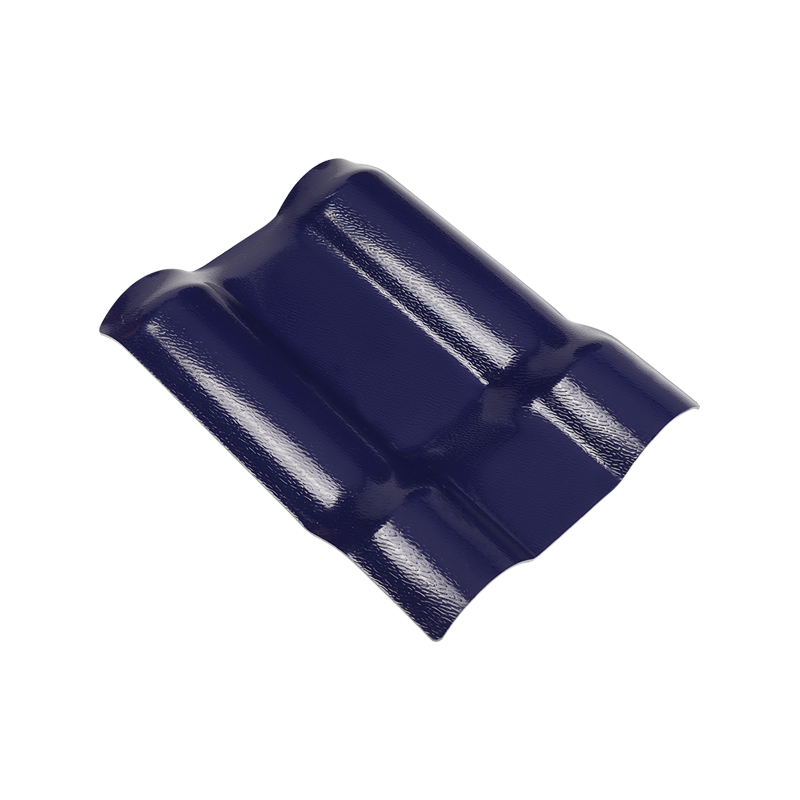
Made from polymers or composite materials, these tiles mimic traditional clay or slate. They are lighter and easier to handle. Interlocking systems simplify placement.
4. PVC or TPO Membrane Roofing
For flat or low-slope roofs, membrane roofing is ideal. Large sheets can be rolled out, cut, and sealed quickly. Some designs feature peel-and-stick adhesives, removing the need for heavy tools or fasteners.
5. Roll Roofing
Roll roofing is convenient for smaller structures or temporary installations. It comes in large sheets that roll out across the roof surface. Minimal cutting and straightforward attachment save time.
Each type balances speed with function. The choice depends on roof style, climate, and long-term maintenance needs.
How Do Lightweight Materials Improve Installation Efficiency?
Lightweight materials significantly speed up and improve the safety of installation work, particularly for components like wall panels, exterior siding, roofing sheets, decking boards, or ceiling tiles.
The lower weight makes a direct, practical impact on day-to-day handling. Installers find it much easier to lift, transport, maneuver, and temporarily brace lighter pieces into position during alignment. This requires less raw strength and often eliminates the need for additional helpers just to hold things steady. As a result, workers experience far less overall fatigue—even after hours of continuous effort or across several days on site—which helps maintain consistent speed and focus while reducing the frequency of mandatory rest breaks or crew swaps.
Pre-fabricated or modular lightweight systems further boost efficiency by arriving ready-to-fit with accurate dimensions and built-in alignment features. Because the panels or sections are engineered to match common building layouts closely, installers spend much less time measuring, marking, trimming edges, or making repeated small corrections on site. That reduction in custom adjustments leads to faster progress, tighter and more uniform joints, and fewer errors that later require fixes, patches, or replacement pieces.
For homeowners handling DIY installations—whether a small accent wall, garage ceiling, backyard pergola, or shed siding—the decreased weight is a major advantage in terms of both safety and feasibility. One person (or one person plus a casual helper) can typically manage the entire process without renting lifts, using specialized hoists, or constantly worrying about dropping heavy material. The lower physical demand means less risk of sudden strains, overexertion, or awkward lifts that could lead to injury.
Professional teams also gain clear benefits from the reduced strain: lower incidence of repetitive-stress complaints (such as lower-back pain, shoulder tension, or wrist fatigue), fewer short-term absences due to minor tweaks or pulls, and a noticeably smoother, less draining workflow overall. Jobs that once felt grueling become more routine and sustainable.
Can DIY Installations Benefit from Easy-to-Install Roofing Materials?
Roofing materials offer clear advantages that make them especially well-suited for DIY projects, giving homeowners realistic confidence and better outcomes without professional help.
Today's DIY crowd often gravitates toward roofing options built from the ground up with simplicity in mind. These products typically include plain-language instructions, illustrated step-by-step guides, exploded diagrams, and sometimes QR-linked video walkthroughs. The guidance is designed so that someone who's never touched a roof before can understand each stage without needing to interpret jargon or guess at best practices.
Systems featuring interlocking edges, click-lock mechanisms, self-aligning tabs, or adhesive-backed strips eliminate most of the skill-heavy steps found in traditional roofing. Homeowners no longer have to master intricate cutting for valleys and hips, nail placement to avoid leaks, or precise underlayment overlaps. Instead, they line up pre-formed pieces, engage the locks or tabs, and secure with minimal fasteners—often just screws or clips driven with a standard drill or hammer. This approach lets capable amateurs produce straight, uniform rows, consistent overlaps, and weather-tight results that closely resemble contractor work.
Speed stands out as one of the strongest draws. Materials that snap together, require little to no custom trimming, and use mechanical connections rather than slow-curing sealants or extensive nailing patterns allow projects to move much faster. A typical small-to-medium roof that might take a pro crew several days can often be finished by a determined homeowner over a long weekend or a handful of evenings—cutting weeks off the timeline compared to more labor-intensive options.
Financially, the savings are substantial. By handling the labor themselves, homeowners avoid paying for professional crews, which frequently accounts for the majority of total project cost. The reduced need for on-site modifications means less material waste from miscuts or damaged pieces. Many of these lightweight, user-friendly systems also eliminate the expense and hassle of renting cranes, scaffolding, or lifts, since the pieces are manageable by hand with just basic ladders and safety equipment.
These straightforward roofing solutions transform a job that once felt out of reach for most homeowners into something achievable and even enjoyable. They provide solid performance and curb appeal while keeping the process approachable, less intimidating, and far more budget-friendly—empowering people to tackle their own roof upgrades with satisfying, reliable results.
How Do Installation Features Impact Durability and Performance?
Contemporary roofing solutions are purposefully designed so that features making them faster and simpler to put in place also build in exceptional strength, weather resistance, and longevity.
- Precision-engineered snap-lock or interlocking seam designs deliver seamless, gapless connections that lock panels firmly together → creating superior barriers against leaks, heavy wind penetration, and ice dam pressure.
- Next-generation protective finishes and treatments defend the surface from intense sun exposure, oxidation, fading, granule shedding, and general environmental assault → keeping the roof looking sharp, granules firmly locked in place, and the underlying material robust for decades longer than traditional options.
- Thermally responsive, high-flexibility formulations readily expand and contract with heat and cold cycles without strain → effectively preventing the typical breakdown modes like fractures, curling, edge lifting, or joint failures that plague rigid older systems.
- Optimized, uniformly applied fastening strategies (concealed clips, built-in locking elements, complete adhesive layers, and so on) distribute forces evenly over the whole roof plane → minimizing weak points, pull-through risks, concentrated wear, or sudden wind-related detachment.
- Modular, segmented panel configurations support quick, isolated replacement of just the compromised sections → avoiding expensive full-area tear-offs, slashing labor hours and material costs for fixes, cutting down on landfill waste, and noticeably prolonging the functional life of the complete roofing assembly.
The same smart engineering choices that streamline and speed up the job for experienced contractors and skilled do-it-yourselfers are frequently the core reasons these roofs end up tougher, more watertight, easier to care for, and capable of providing reliable, high-level safeguarding year after year.
What Are the Environmental and Energy Considerations?
A growing number of roofing products engineered for simpler, quicker installation also deliver clear environmental and energy advantages as part of their core design.
- Excellent end-of-life recyclability — Metal roofing panels stand out because the metals they use (steel, aluminum, copper, etc.) retain full recyclability after 40–70+ years of service, making it straightforward to recover and reintroduce the material into new production cycles instead of sending it to landfills.
- Meaningful use of recycled inputs — Many contemporary synthetic, composite, or polymer-based shingles and tiles now include substantial recycled content from post-consumer or manufacturing sources, lowering the need for new raw materials while keeping durability and appearance high.
- Built-in cool-roof reflectivity — Light-colored finishes or advanced solar-reflective coatings are common → these surfaces reflect far more sunlight than they absorb, which keeps roof and attic temperatures noticeably lower → directly reducing the amount of energy needed for air conditioning in warm or hot climates and cutting peak cooling loads.
- Smaller logistics and installation footprint — Because many of these modern systems are significantly lighter than traditional alternatives, they require less diesel fuel for transport from factory to jobsite and often eliminate (or greatly reduce) the need for large cranes, forklifts, or other heavy equipment during placement → trimming both transportation emissions and on-site energy use.
Taken together, these characteristics demonstrate how features that streamline the roofing process for contractors and capable homeowners frequently align with — and actively support — lower environmental impact, reduced operational energy costs, and more responsible resource use throughout the product's lifecycle.
How Do Cost and Time Efficiency Compare Across Materials?
Material choice affects project budget and duration. Lightweight panels and modular shingles reduce labor costs and speed installation.Membrane and roll roofing require fewer tools and shorter work hours. They may be particularly suitable for commercial or temporary structures.Durability varies. Some materials offer long-lasting protection with minimal maintenance, which balances initial cost with long-term savings.
Material TypeInstallation SpeedHandling DifficultyDurability
| Material Type | Installation Speed | Handling Difficulty | Durability |
|---|---|---|---|
| Metal Panels | Fast | Easy | High |
| Asphalt Shingles | Moderate | Easy | Medium |
| Synthetic Tiles | Moderate | Easy | Medium-High |
| PVC/TPO Membranes | Fast | Easy | Medium |
| Roll Roofing | Very Fast | Very Easy | Low-Medium |
What Trends Are Emerging in Easy-to-Install Roofing Materials?
The roofing industry continues to push forward with designs that prioritize both innovation and real-world convenience for installers and homeowners alike.
- Pre-fabricated and modular systems leading the way — Manufacturers are shifting heavily toward factory-assembled components, click-together panels, and sectional layouts that snap or lock into place with minimal cutting, measuring, or specialized tools → making large-scale professional jobs faster and enabling more confident DIY installations.
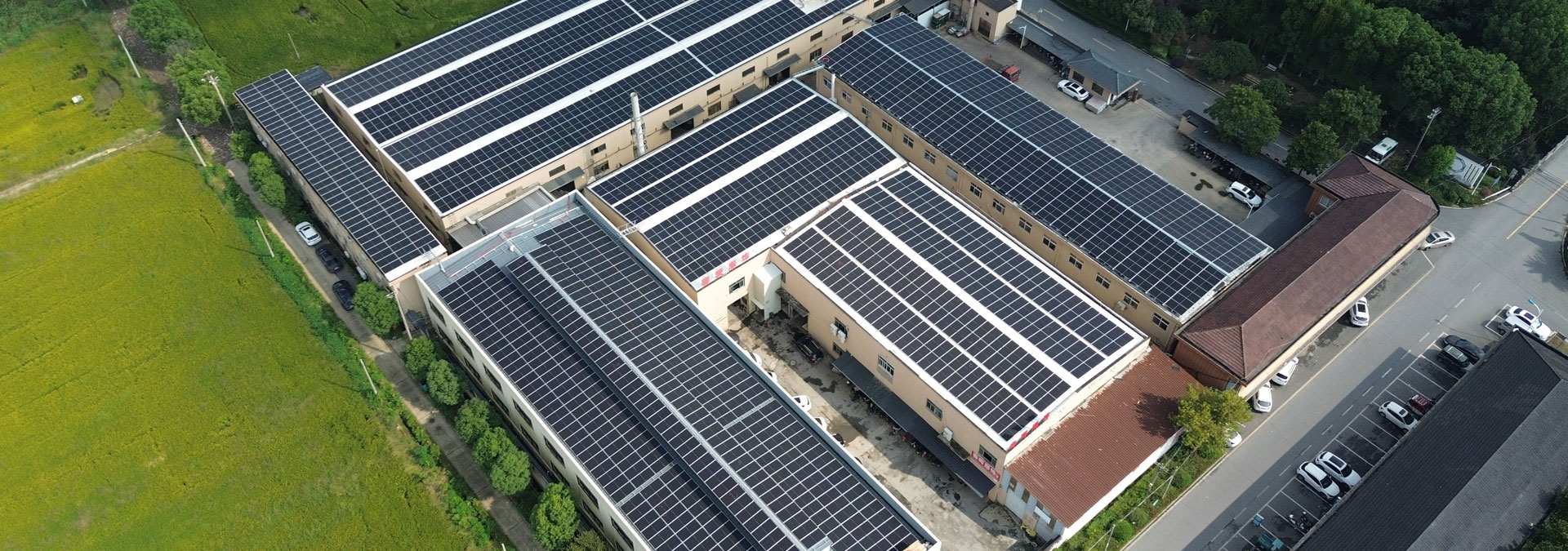
- Built-in solar compatibility on the rise — An increasing number of roofing products now feature integrated mounting points, pre-routed channels, or fully compatible surface profiles specifically engineered to accept solar panels directly → allowing seamless rooftop photovoltaic systems without compromising the roof's weatherproofing or structural integrity.
- Smart and high-performance coatings taking center stage — Advanced reflective finishes, self-cleaning surfaces, and thermally adaptive coatings are becoming standard in many lines → these not only boost year-round energy efficiency by rejecting solar heat but also help combat urban heat island effects in densely built areas.
- DIY accessibility expanding rapidly — There's strong growth in materials marketed toward capable homeowners, with clearer instructions, color-coded components, forgiving tolerances, forgiving alignment features, and reduced need for heavy tools or ladders → delivering professional-grade appearance and performance even when installed without years of trade experience.
- Dominance of lightweight, sustainable, modular thinking — Future product development centers on lighter-weight construction (using composites, advanced alloys, or recycled-content polymers), eco-conscious material choices, and highly modular formats → all while keeping ease and speed of installation as the non-negotiable core priority for both trade crews and end-users.
The clearest trend is that "easy to install" is no longer a secondary benefit—it's now a central design driver, intertwined with durability, energy performance, solar readiness, sustainability, and broad accessibility for pros and homeowners alike.

 Email:
 Phone:
 Adress: