



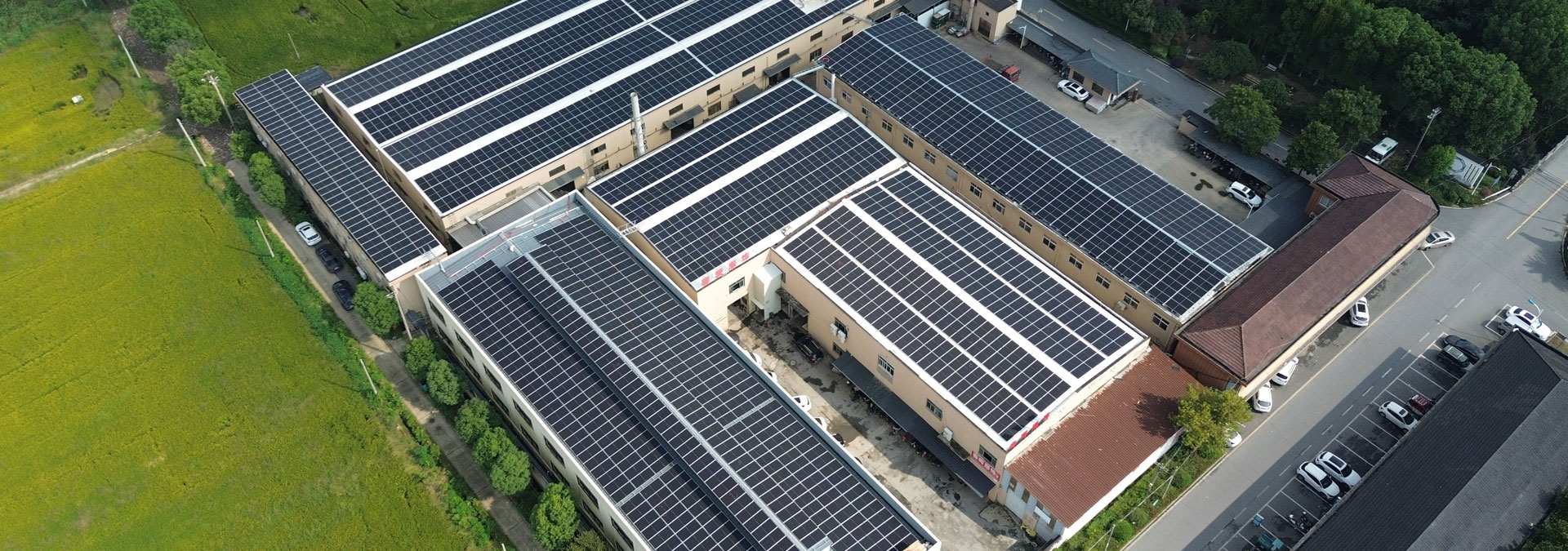
In today's construction and renovation projects, roofing is no longer seen as just a simple outer layer. It has become an important part of how a building connects with its environment. Roofs are now expected to do more than just keep out the weather — they also influence energy use and the sourcing of materials. This change has affected the way choices are made during design and when selecting materials.
Environmentally friendly roofing materials are often discussed in relation to sustainability goals. However, the idea goes beyond any single characteristic. It combines several key factors: durability, how resources are used, the impact of the manufacturing process, and how well the material performs over a long period of time. Choosing the right material means carefully considering how each option will actually behave under real conditions throughout its entire lifespan.
What Does "Environmentally Friendly" Mean in Roofing?
People use the term "environmentally friendly" quite often when talking about roofing, but it can sound pretty vague. In roofing, it generally describes materials that try to create less overall harm across their full lifespan. That includes where the raw materials come from, how the product is made, how the roof performs once it's installed, and what happens to it when it eventually needs to be taken off and replaced.
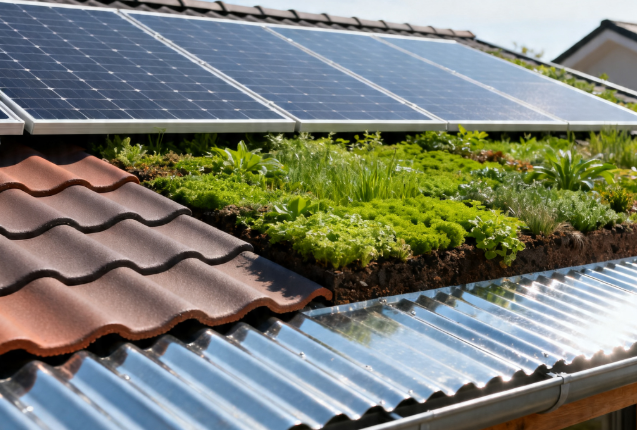
Certain roofing materials stand out because they're made from renewable resources. Others are favored because they can be recycled or reused at the end of their life. Some are picked specifically for energy-saving qualities, such as reflective coatings that bounce heat away or better insulation that helps keep indoor temperatures steady.
Being environmentally responsible with a roof is almost never about just one single thing. It's about how several positive features work together. A roof that lasts much longer reduces how often it needs to be replaced, which means less waste and fewer resources used over time. Materials that help maintain stable indoor temperatures can cut down on energy used for heating and cooling. When durability, energy efficiency, responsible sourcing, and good end-of-life options all come together, the roofing material ends up with a much better environmental impact overall.
In simple terms, "environmentally friendly" roofing means looking at the bigger picture and choosing options that reduce negative effects in as many ways as possible.
How Does Material Longevity Affect Sustainability?
Durability often has a bigger effect on sustainability than people first realize. A roof that stays in good working condition for many years means fewer replacements over time. That translates to less demand for new raw materials, less manufacturing, and much less waste heading to the landfill.
Materials with a shorter lifespan tend to create a repeating cycle of tear-offs and new installations. Each round involves transporting materials, labor, equipment, and disposal. Over the years, all of that adds up. A longer-lasting roof might cost more at the start, but it can reduce the total environmental load across its lifetime.
How well the material resists weather also plays a key role. Roofs that hold up against sun, wind, rain, and temperature changes without breaking down quickly are more likely to keep performing as expected. This kind of stability benefits both the environment and the building owner in practical ways.
Can Roofing Materials Support Energy Efficiency?
The roof plays a significant role in how much energy a building uses. Because its surface is exposed to sunlight for most of the day, different roofing materials handle that heat differently. Some reflect a large amount of the sun's energy away, while others absorb and hold onto it.
Reflective roofing can help prevent too much heat from building up inside the building. This often lowers the need for air conditioning during hot weather. On the other hand, materials with good insulating qualities help keep warmth inside during colder months, which can reduce heating costs.
The right balance between reflection and insulation depends on the local climate and the building's design. A material that performs well in one area may not be the best choice in another. Taking the time to select a roofing material that matches the specific conditions can lead to real energy savings over the years.
How Important Is Material Sourcing and Production?
Where roofing materials come from and how they're made can have a real effect on their environmental footprint. Options based on abundant or renewable resources tend to put less pressure on natural systems. Still, sourcing is only part of the story.
The manufacturing process itself matters too. Some methods use a lot of energy or create more emissions, while others are set up to reduce waste and reuse byproducts. These differences can change the total impact of the material quite a bit.
Transportation distance is another factor. Materials that have to travel long distances add extra fuel use and emissions. Locally available options can sometimes help lower this impact, as long as they also meet the needed quality and performance standards.
Are Recyclability and Reuse Worth Considering?
What happens to the roofing material when the roof reaches the end of its life is an important consideration that sometimes gets overlooked at the beginning. The ability to recycle or reuse components can make a meaningful difference in reducing waste.
Materials that can be recycled help keep debris out of landfills. In some cases, old roofing parts can be processed and turned into new products for construction. Certain systems also allow individual components to be separated and reused in other applications.
How the roof is designed and installed can affect how easily these materials can be recovered later. Thinking about the end-of-life stage early on can make future removal and handling much simpler and more efficient.
How Does Installation Influence Environmental Impact?
The installation process can affect the environmental impact of a roof both right away and for years afterward. Materials that are easier to work with often lead to shorter installation times and lower use of extra resources on the job site.
Waste created during installation is another point to watch. Some materials generate more scraps or need additional layers, while others are made to fit with minimal trimming and leftover pieces.
The quality of the installation also plays a big role in long-term performance. When done right, the roof can deliver its full expected lifespan and efficiency. If the installation is poor, it can cause problems that shorten the roof's life and lead to earlier replacement, adding to the overall environmental burden.
What Are Common Types of Environmentally Friendly Roofing Materials ?
A number of roofing materials are frequently chosen for their environmental benefits. Each type provides a different combination of features, so the right option depends on what matters most for the specific project — such as durability, appearance, climate suitability, and the building's intended use.
Here's a straightforward overview of some commonly considered options:
| Material Type | Key Characteristics | Environmental Considerations |
|---|---|---|
| Metal Roofing | Durable, lightweight | Often recyclable, long service life |
| Clay or Concrete | Dense, stable | Long lifespan, natural composition |
| Wood Shingles | Natural appearance | Renewable source when managed responsibly |
| Recycled Materials | Made from reclaimed content | Reduces raw material demand |
| Membrane Systems | Flexible application | Can support energy efficiency |
Each material has its own strengths and limitations. The most important step is matching the material's qualities to the needs of the building, the local climate, and the priorities of the project.
How Can Climate Influence the Right Choice?
Climate plays a major role in deciding which roofing material is the best fit for a project. Local weather conditions directly affect how well the roof will perform and how long it will last. In sunny regions with intense sunlight, reflective surfaces can help keep excess heat from entering the building. In areas that regularly see heavy rain, snow, or high humidity, strong water resistance becomes one of the most important features.
Wind exposure, big temperature swings between day and night or across seasons, and other weather patterns also matter a great deal. When a material matches the local climate, it tends to hold up better, require fewer repairs, and last longer. This extended lifespan helps reduce the need for new materials and cuts down on waste, supporting both practical performance and environmental goals.
It's also important to think about how the building will be used. A family home often has different needs than a commercial office or industrial facility. The surrounding environment — whether there are nearby buildings, trees, open fields, or dense urban surroundings — can further influence how the roof handles everyday conditions.
What Should Be Balanced When Making the Final Decision?
Choosing environmentally responsible roofing materials usually involves balancing several different factors. No single material meets every need perfectly, so the final decision comes down to how well the various qualities align with the specific priorities of the project.
Cost, how easily the material can be obtained, and design or appearance preferences all play a part. Environmental considerations add another important dimension, steering the choice toward options that can lower the long-term impact on resources, energy consumption, and waste.
It helps to look at the roof as part of the complete building system instead of on its own. The way it interacts with insulation, ventilation, and the building's overall structure can make a big difference in how well everything works together. A thoughtful selection supports both environmental responsibility and solid, everyday performance.
The process is not about discovering one perfect material. It is about finding the right combination of climate suitability, durability, energy efficiency, cost, and sustainability that best meets the needs of the project.


 Email:
 Phone:
 Adress: