



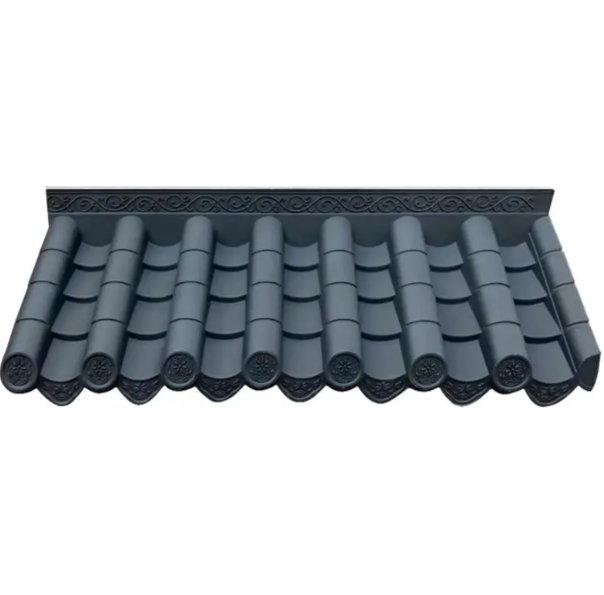
Chinese roof tiles have a visual character that can be recognized from their curved surfaces, repeated layers, subtle marks, and changing shadows. The texture is not created by one step alone. It develops through the relationship between the tile shape, material, surface treatment, arrangement, and the way the finished roof interacts with light.
For traditional architecture, roof tiles are more than protective coverings. Their repeated forms can influence the rhythm of a roof and contribute to the overall appearance of a building. A small difference in surface finish can also make a roof appear smooth, aged, rustic, or decorative.
Modern architectural projects continue to explore these visual qualities. Some use traditional-looking tiles, while others reinterpret familiar Chinese roof tile textures with updated materials and production methods.
Understanding how the texture is created can help explain why Chinese roof surfaces often have such a layered appearance.
What Creates the Basic Texture of Chinese Roof Tiles?
The basic texture begins with the physical shape of the tile.
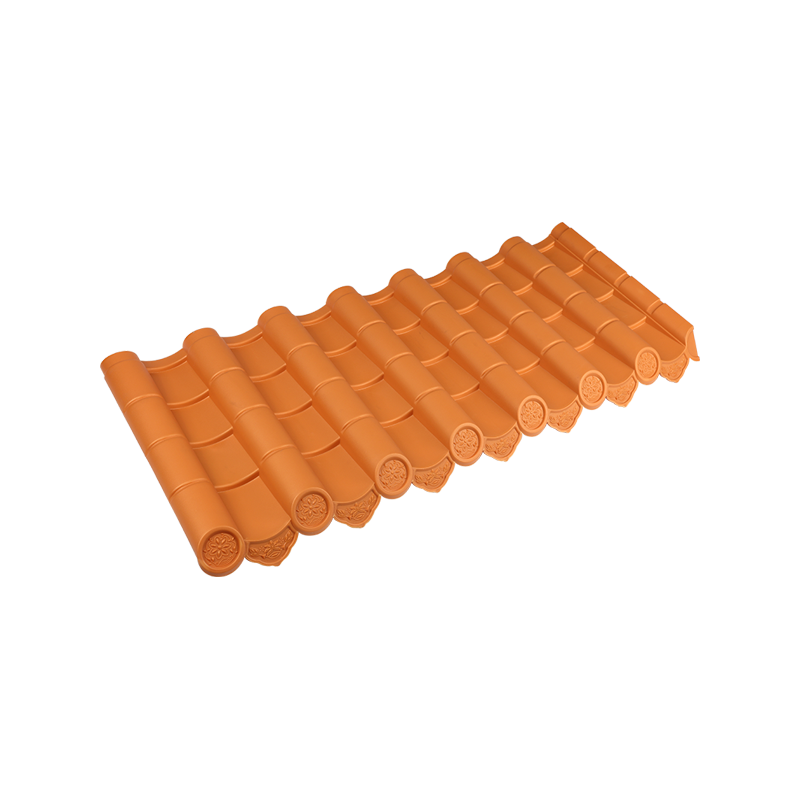
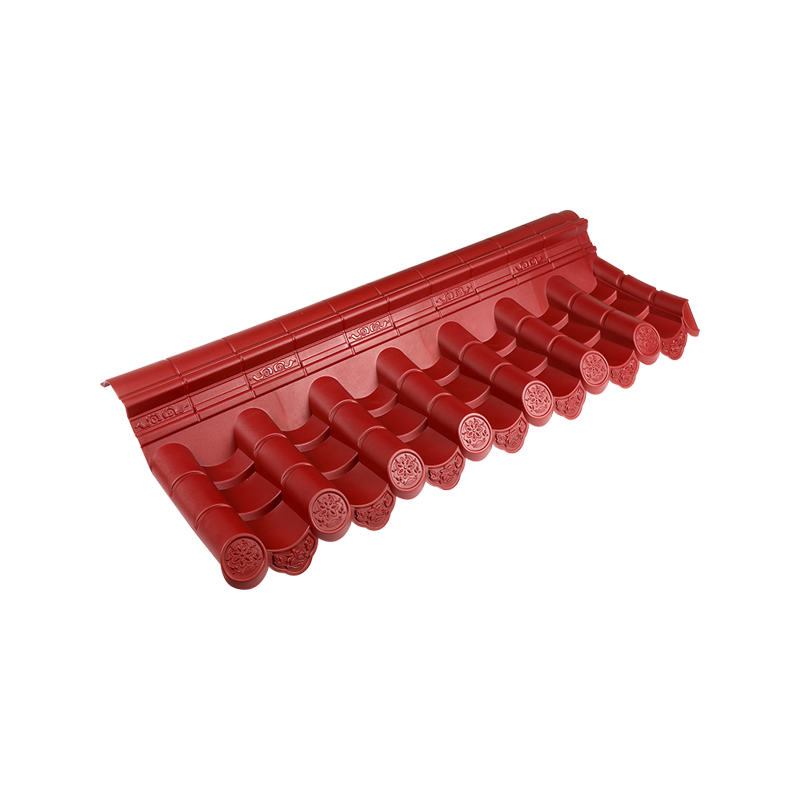
Chinese roof tiles are not always completely flat. Many traditional forms include curved surfaces. When individual tiles are placed next to or over one another, these curves create repeated ridges and recessed areas.
This produces a natural rhythm across the roof.
The texture therefore comes from both the individual tile and the way many tiles are arranged together.
A single tile may look relatively simple when viewed by itself. Once it becomes part of a roof, the repeated pattern becomes much more noticeable.
Several factors can influence this appearance:
- Tile shape
- Surface smoothness
- Curvature
- Edge design
- Tile arrangement
- Overlapping areas
- Surface color
- Firing or finishing effects
- Natural variation in the material
The roof is therefore not just a collection of separate tiles.
It is a visual surface made from many repeated elements.
This is one reason Chinese roof tile texture can look different from one building to another even when similar tile forms are used.
How Does Tile Shape Influence Chinese Roof Tile Texture?
Shape is one of the most important parts of the visual effect.
Traditional Chinese roofing can include different types of tiles designed to work together. Curved tiles can create channels and raised sections. Flat or less curved pieces can provide another visual rhythm.
When these forms are repeated, the roof develops a pattern of light and shadow.
The curve of a tile can also affect how much of its surface is visible.
A shallow curve may create a relatively calm appearance. A stronger curve can produce more obvious highlights and shadows.
The edges also contribute.
Straight edges create a regular rhythm. Rounded edges can make the roof appear softer. Decorative tile ends can add another layer of visual detail near the eaves.
This means texture does not necessarily refer to roughness.
A smooth ceramic surface can still have a strong texture when its shape and arrangement create visual depth.
That distinction is useful when discussing Chinese roof tiles.
Texture can be physical, visual, or a combination of both.
How Does Overlapping Create a Layered Roof Texture?
Overlapping is another major factor.
Roof tiles are arranged so that one section can cover part of another. This creates repeated lines across the roof.
The result is similar to a series of scales or layers.
From a distance, the individual tiles may merge into a larger pattern. From closer range, the edges and spaces between them become more visible.
This layered effect gives the roof a sense of depth.
| Texture Element | Visual Effect |
|---|---|
| Curved tile surface | Creates highlights and shadows |
| Overlapping edges | Produces layered lines |
| Repeated tile forms | Builds a consistent rhythm |
| Tile ends | Adds detail near roof edges |
| Surface variation | Creates a less uniform appearance |
| Glaze or finish | Changes how light reflects from the surface |
The arrangement also affects how the roof looks from different directions.
Viewed from below, the eaves may emphasize the tile ends. Viewed from above, the repeated curves and overlaps can become more obvious.
Light changes the appearance again.
Morning light, cloudy conditions, and strong sunlight can make the same roof appear different.
How Does Material Influence the Texture of Chinese Roof Tiles?
Material affects both the physical surface and the final appearance.
Traditional roof tiles have often been associated with clay-based materials and ceramic production. The material can be shaped, dried, and fired to create the finished tile.
During production, the material can develop a particular surface character.
A relatively smooth surface can reflect light differently from a rougher surface.
Small variations can also make a roof appear more natural.
Modern production can offer more consistent surfaces. This can be useful when a project requires a regular visual pattern.
At the same time, some architectural designs intentionally seek a more traditional appearance.
In those cases, subtle surface variation may be part of the desired effect.
Material selection can therefore influence more than durability or construction requirements.
It can also influence the visual language of the roof.
How Does the Manufacturing Process Create Surface Texture?
The production process can influence the texture before the tile reaches the roof.
The material needs to be formed into the intended shape. This stage establishes the basic curve, edge, and surface structure.
After forming, the tile needs to become stable enough for later handling and processing.
Firing can then change the material's final appearance.
The result can include differences in color, surface feel, and visual consistency.
Some tiles may also receive a surface treatment.
Glazing is one example. A glaze can create a smoother visual surface and change the way light interacts with the tile.
Unglazed tiles can have a more natural and subdued appearance.
These different approaches can produce very different roof textures even when the basic tile shape is similar.
The process therefore connects the material to the appearance.
Texture is not simply added at the end.
It can develop through several stages of production.
How Do Traditional Patterns Appear on Chinese Roof Tiles?
Not all Chinese roof tile texture comes from the tile body itself.
Some roof components can include decorative patterns.
Tile ends are especially important in traditional roof design. These pieces can be more visible than the tiles that sit farther up the roof.
Decorative motifs may include geometric forms, plant-inspired shapes, cloud-related designs, characters, or other traditional elements.
These patterns can create a smaller visual texture within the larger roof surface.
There is an interesting relationship between scale and detail.
The overall roof may appear simple from a distance.
Closer inspection can reveal decorative details around the eaves.
This gives the building two different visual experiences.
At a distance, the repeated roof lines establish the architectural silhouette.
At close range, individual tiles and decorative elements become part of the building's character.
That combination is one reason roof tile details remain relevant in traditional and modern Chinese-inspired architecture.
How Does Color Change the Appearance of Chinese Roof Tile Texture?
Color can make the physical texture easier or harder to notice.
A strong contrast between raised and recessed surfaces can make curves appear more obvious.
A similar tone across the entire surface can create a quieter appearance.
Glazed tiles can introduce another visual effect.
Depending on the finish, light may reflect more strongly from certain areas. This can emphasize the shape of individual tiles.
Natural-looking surfaces can produce a softer appearance.
Color variation can also make repeated tiles look less mechanically uniform.
This does not mean that more variation is always desirable.
A project may require a consistent appearance. Another may aim for a traditional visual effect with subtle differences between individual pieces.
The desired appearance should therefore influence the selection of tile color and finish.
How Do Light and Shadow Reveal Chinese Roof Tile Texture?
A roof's texture is not fully visible without considering light.
Curved surfaces create different angles.
When sunlight reaches those surfaces, some areas become brighter while others remain shaded.
The repeated pattern can then become more noticeable.
This is particularly clear on roofs with overlapping curved tiles.
The upper section of one tile may catch light. The area beneath it can remain darker. Repeated across the roof, this creates a rhythm of light and shadow.
Cloudy conditions can produce a softer effect.
Direct sunlight can make the roof appear more sharply defined.
The viewing angle also matters.
A roof seen from ground level may emphasize the silhouette and eaves. A roof seen from above may reveal more of the repeated surface pattern.
This means texture is partly a relationship between the roof and its surroundings.
The same tiles can appear different depending on where a person stands and how light reaches the building.
How Is Chinese Roof Tile Texture Adapted for Modern Architecture?
Modern buildings do not always reproduce traditional roofs exactly.
Instead, designers may borrow selected elements.
The curved profile can be retained.
The layered arrangement can be simplified.
Traditional colors can be reinterpreted.
Decorative details can be reduced.
New materials can also be used to create a familiar visual effect.
This approach allows Chinese roof tile texture to appear in contemporary architectural settings without copying every historical detail.
For example, a modern building may use a repeated curved pattern to create a connection with traditional architecture.
Another project may focus on the roof silhouette rather than decorative tile ends.
A residential project may use a restrained texture that works with a modern facade.
A cultural or landscape project may use more visible traditional elements.
| Design Approach | Possible Visual Character |
|---|---|
| Traditional tile arrangement | Strong connection with historic architecture |
| Simplified tile pattern | Cleaner modern appearance |
| Curved tile profiles | Emphasizes roof rhythm |
| Decorative tile ends | Adds detail near the eaves |
| Modern surface finish | Combines familiar forms with contemporary appearance |
| Subtle texture | Creates a quieter architectural effect |
This flexibility explains why Chinese roof tile texture can continue to appear in new building designs.
The goal does not always have to be historical reproduction.
Sometimes the texture itself becomes the design reference.
What Should Designers Consider When Choosing Chinese Roof Tile Texture?
The desired appearance should be considered alongside the building's practical needs.
A highly decorative roof may suit a cultural or heritage-style project. A modern residence may require a more restrained texture.
The surrounding architecture also matters.
A roof should work with the facade, windows, landscaping, and overall building form.
Local weather conditions can influence material and construction choices as well.
Maintenance should not be overlooked.
A textured roof contains many visible surfaces and joints. Keeping those areas in suitable condition can help preserve the intended appearance.
Designers and builders can consider several basic questions:
- What architectural style should the roof express?
- Should the texture look traditional or contemporary?
- How visible will the roof be from ground level?
- Will the roof be exposed to strong sunlight or frequent rain?
- Does the tile surface match the desired color and finish?
- Are decorative details needed?
- How will the roof interact with the surrounding building?
- What maintenance approach will be required?
These questions help connect appearance with actual building use.
Chinese roof tiles texture is created through a combination of shape, material, surface treatment, overlapping arrangement, decorative details, color, and light. None of these elements needs to work alone.
The curved profile gives the tile physical depth. Overlapping creates repeated layers. Surface treatment changes how light reflects from the material. Decorative components add smaller patterns. The finished roof brings all these details together into one visual surface.
That combination allows Chinese roof tiles to remain recognizable while giving architects and builders room to reinterpret traditional roof textures for different building styles.

 Email:
 Phone:
 Adress: