



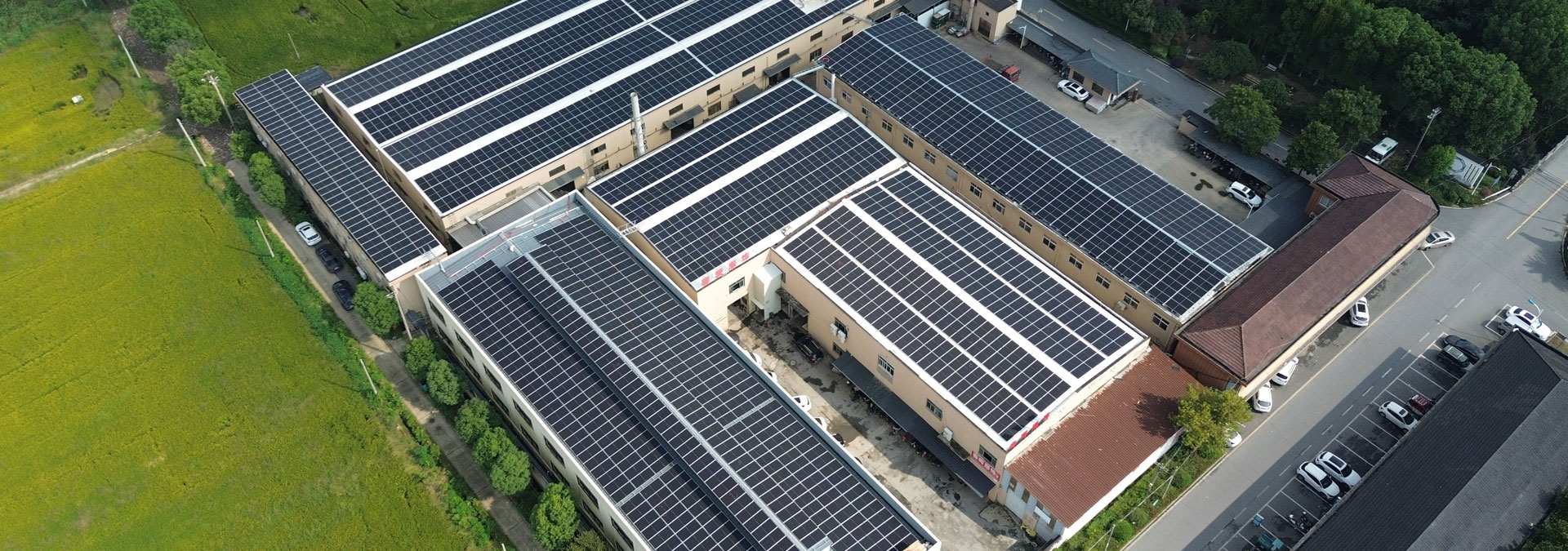
Chinese Roofing Materials Manufacturers move through a long journey before they reach a construction site. Raw materials are sourced, processed, formed into panels or tiles, packed, stored, transported, and delivered across regions or borders. Each step adds cost and time. Each step also creates risk.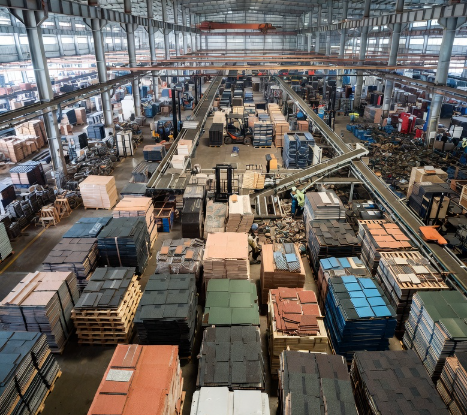
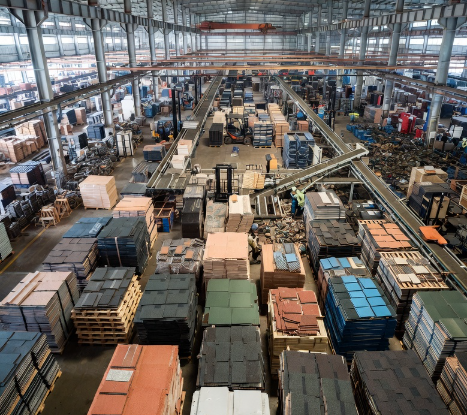
Chinese roofing factories operate in a competitive global environment. Buyers expect stable quality, flexible production, and reliable delivery schedules. Supply chain efficiency is not only about speed. It is about coordination, visibility, and control.Factories that focus on these areas reshape how roofing products flow from raw material to finished roof.
Why Is Supply Chain Efficiency So Critical in the Roofing Industry?
Roofing products—shingles, tiles, metal panels, membranes, insulation, and accessories—are large, heavy, and space-intensive. They need protected storage to avoid weather damage, careful stacking to prevent breakage, and substantial transport capacity. Shipping costs for these bulky items make up a large share of the final price delivered to the job site and heavily influence competitive bidding and margins.
Most construction projects run on fixed, interdependent timelines. Roofing installation usually bridges the structural phase and interior finishes; any delay in material arrival can stop crews, push back subcontractors, extend project duration, and lead to penalties, extra labor costs, or lost productivity.
For roofing manufacturers, a smooth, responsive supply chain directly drives:
- Faster inventory turnover — Quick movement of incoming raw materials and outgoing finished goods frees capital and cuts warehousing expenses.
- Uninterrupted production — Steady, on-schedule delivery of asphalt, fiberglass mat, granules, metal coils, or clay keeps lines running without costly shutdowns.
- Reliable delivery performance — Consistent on-time shipments strengthen relationships with distributors and contractors, reduce expedited freight charges, and minimize order cancellations.
- Higher customer satisfaction — Predictable lead times let contractors plan crews and meet deadlines, which builds loyalty and repeat orders.
Late raw materials cause idle machines and wasted labor. Excess finished goods sitting in inventory tie up money, raise storage fees, and increase the chance of damage or quality issues.
Chinese roofing producers frequently manage a mix of strong domestic demand and substantial export volumes to overseas markets. Coordinating these two streams effectively requires tight planning, flexible scheduling, real-time tracking, and adaptable logistics to prevent congestion, prioritize urgent shipments, and keep service levels high on both fronts.
How Do Factories Improve Raw Material Coordination?
The supply chain begins with sourcing. Roofing products rely on metals, resins, coatings, or composite materials. Stability at this stage supports stability throughout the process.
Many factories improve coordination by:
- Building long-term relationships with material suppliers.
- Establishing clear quality standards at the purchasing stage.
- Using forecast-based procurement instead of reactive buying.
Rather than waiting for urgent orders, factories estimate future demand. This approach reduces sudden shortages. It also allows better price planning.
Raw Material Optimization Strategies
| Strategy | Operational Impact |
|---|---|
| Supplier partnerships | Stable material flow |
| Demand forecasting | Reduced urgent procurement |
| Pre-inspection procedures | Lower rejection rates |
| Flexible contracts | Risk sharing |
Stable input reduces disruptions later in production.
Can Production Planning Reduce Bottlenecks?
Roofing factories handle multiple product types concurrently—metal roofing sheets, synthetic or asphalt shingles, insulated composite panels, edge trim, flashings, and small accessories. These items frequently share the same critical machines, including roll-forming lines, coating applicators, slitters, cut-to-length equipment, and final packing stations. Without proper coordination, this shared resource usage leads to congestion, extended queues, idle machinery during changeovers, and late shipments.
Top-performing plants avoid these issues by applying thoughtful production planning that maintains steady, balanced flow:
- Orders are scheduled according to actual machine capacity and real-time availability, preventing any single line from becoming overloaded.
- Similar products are grouped into batches (e.g., matching gauge, color range, or profile family) to dramatically reduce setup times and changeover duration.
- Work-in-progress is continuously monitored at each workstation—using visual boards, quantity limits, or digital tracking—to detect and correct buildup early, keeping the entire line in equilibrium.
- Production cycles are kept relatively short and agile, enabling fast reaction to customer-requested changes in quantity, color, profile, or delivery priority.
This flexibility proves especially valuable in the construction sector, where project requirements, material specifications, or deadlines can change with little notice.
Strong planning eliminates much of the waste caused by repeated setups, prevents excess semi-finished inventory from accumulating, aligns production more closely with true demand, shortens end-to-end lead times, and greatly improves delivery reliability—even amid a wide product variety and fluctuating order patterns.
How Do Inventory Systems Support Faster Delivery?
Inventory is both a buffer and a burden. Too little stock risks delays. Too much stock increases storage cost.
Chinese roofing factories often apply balanced inventory practices:
- Maintaining safety stock for common models.
- Producing customized orders on demand.
- Separating domestic and export inventory streams.
Warehouse layout plays an important role. Organized storage reduces loading time. Clear labeling prevents dispatch errors. Some factories design warehouses close to production lines to shorten internal transport paths.
Table: Inventory Management Approaches
| Method | Benefit |
|---|---|
| Classified storage zones | Faster picking |
| Rolling stock review | Controlled stock levels |
| Dedicated export staging area | Improved shipment accuracy |
| Modular packaging | Flexible transport planning |
Efficient warehousing reduces handling steps and supports on-time shipment.
What Role Does Logistics Coordination Play?
Roofing materials are bulky and often travel long distances. Domestic deliveries need tight trucking coordination; exports add port bookings, container space, customs paperwork, and vessel cutoffs.
Top factories improve logistics by:
- Building reliable partnerships with carriers and forwarders for consistent service and better rates.
- Consolidating orders into full loads or containers to lower per-unit shipping costs.
- Timing production finish so goods reach the loading area just before pickup—avoiding early storage fees or missed departures.
Precise timing is critical: too early increases yard costs and exposure risk; too late causes delays, demurrage, or extra freight expenses.
Clear, real-time communication between production, warehouse, and logistics teams prevents mismatches. Many plants use dedicated coordinators to handle export paperwork, track shipments, and solve issues quickly.
Strong logistics coordination cuts transport expenses, protects construction schedules, reduces holding costs, and ensures dependable delivery—key to staying competitive in domestic and export markets.
How Is Digitalization Changing Supply Chain Management?
Digital tools support coordination across departments. Production data, inventory records, and shipment status can be integrated into unified systems.
Digitalization allows:
- Real-time order tracking.
- Transparent material consumption monitoring.
- Faster response to schedule changes.
When sales teams receive new orders, the system reflects capacity and material availability. This reduces manual estimation. It also improves delivery commitment accuracy.Data analysis can reveal patterns. Seasonal demand shifts. Popular product categories. Frequent order combinations. Factories adjust procurement and production plans accordingly.Digital visibility does not remove challenges. It reduces uncertainty and supports faster decisions.
How Do Chinese Roofing Factories Manage Export Complexity?
Export operations add layers of complexity. Packaging must protect products during long transport. Documentation must match destination requirements. Communication spans time zones.
Optimization strategies include:
- Standardizing export packaging formats.
- Preparing documentation templates for common destinations.
- Coordinating production batches based on container loading plans.
Factories may also design packaging that balances protection and space efficiency. Proper stacking improves container utilization. This reduces transport cost per unit.
Table: Export Supply Chain Focus Areas
| Area | Efficiency Objective |
|---|---|
| Packaging design | Space optimization |
| Documentation workflow | Faster clearance |
| Shipment scheduling | Reduced waiting time |
| Communication channel | Clear order updates |
Managing these elements carefully strengthens international competitiveness.
Can Lean Practices Improve Overall Flow?
Lean management concepts influence many manufacturing sectors. Roofing factories adapt similar principles to their operations.
Common practices include:
- Reducing unnecessary movement within workshops.
- Simplifying approval steps.
- Encouraging cross-department communication.
When teams share information early, problems are addressed sooner. For example, if raw material supply shifts, production scheduling can adjust before disruption spreads.
Continuous improvement meetings help identify inefficiencies. Small adjustments accumulate over time. The goal is steady refinement rather than dramatic change.
How Do Factories Balance Cost and Flexibility?
Supply chain efficiency must balance stability with adaptability. Construction markets fluctuate. Large infrastructure projects may create sudden demand increases. Smaller projects may require customized dimensions or finishes.
Chinese roofing factories often respond by:
- Maintaining modular production lines.
- Offering flexible order quantities.
- Diversifying supplier networks.
This balance reduces reliance on single sources and single product categories. It also allows factories to shift focus between domestic and export markets when needed.
Operational resilience supports long-term efficiency.
What Challenges Still Remain?
Even strong systems face ongoing risks:
- Raw material price volatility
- Transport delays or shortages
- New regulations or tariffs in export markets
- Weather disruptions to shipping
Factories reduce these impacts by:
- Keeping backup suppliers ready
- Building flexibility into production plans
- Maintaining clear, proactive updates with customers
Supply chain efficiency requires constant refinement. Roofing products move through physical transport and regulatory channels—every step must stay aligned.
Chinese roofing plants continue improving procurement, scheduling, inventory, logistics, and digital tools. Real gains come from better coordination across functions, not just faster speed, resulting in more reliable delivery in a changing construction landscape.



 Email:
 Phone:
 Adress: