



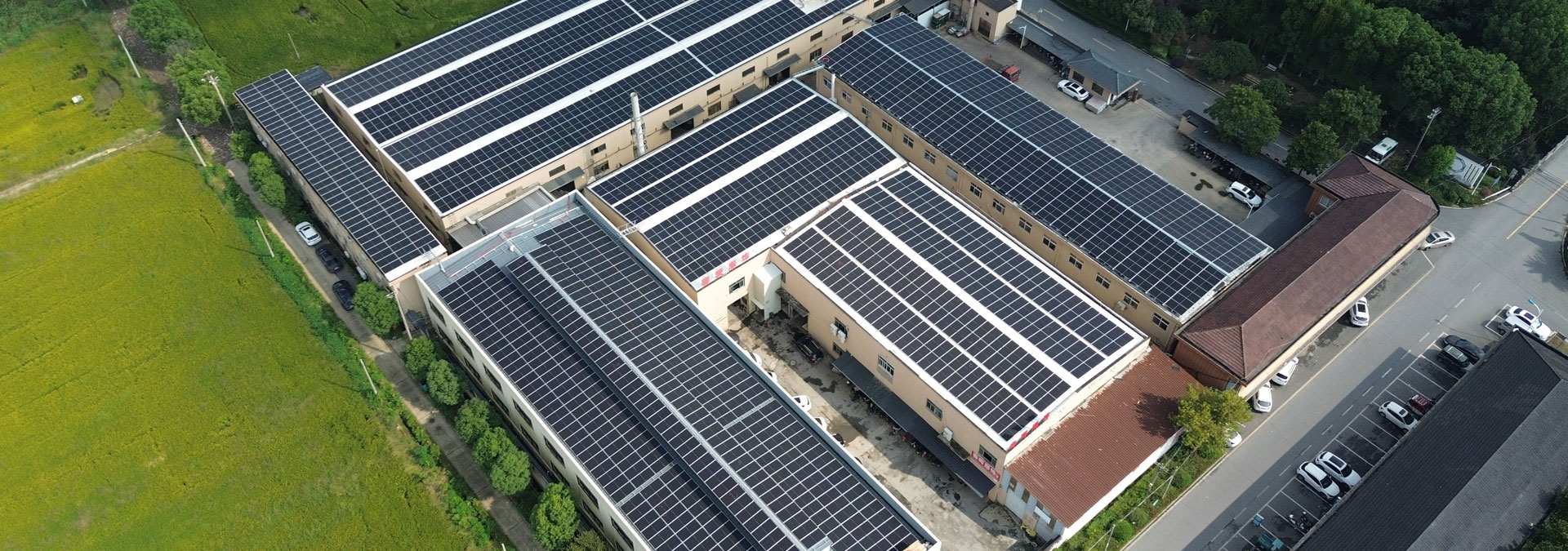
Step into a roof tile factory on a regular working day. There is no dramatic scene. Machines move at a steady pace. Workers follow familiar routines. Pallets come and go. At first glance, it feels like any other manufacturing setting.
Look a little longer, though, and small details begin to stand out. Materials are stacked more neatly than before. Water does not simply run off after use. Broken pieces are not always thrown aside. These changes are not announced with banners, yet they reflect a shift that is slowly reshaping how factories operate.
Environmental practices in this field are rarely about one big decision. They show up in daily habits. They appear in how people handle materials, how they clean, how they store, and how they think about what gets wasted.
Why are roof tile factories paying closer attention to the environment?
There is no single reason behind this change. It grows from a mix of pressure and practicality.
Factories are part of their surroundings. Dust travels. Water flows. Waste accumulates. Over time, even small inefficiencies become visible, both inside the factory and beyond its boundaries.
At the same time, buyers are asking different kinds of questions. A product is no longer judged only by how it looks when it arrives. There is curiosity about how it was made. This does not always come as a formal requirement. Sometimes it is just a conversation that gradually shifts expectations.
There is also a simple business reality. When materials are used more carefully, costs can be easier to manage. When spaces are cleaner, work tends to move more smoothly. Environmental awareness often overlaps with operational sense.
What does responsible material handling look like on the factory floor?
Raw materials usually arrive in bulk. In older setups, they might be placed wherever space was available. Wind, movement, and repeated handling could lead to loss or mixing.
In more organized factories, material zones are clearly defined. Storage areas are kept separate. Some are covered. Others are enclosed just enough to prevent unnecessary exposure.
Workers become part of this system. They know where certain materials belong. They return unused portions instead of leaving them scattered.
Small habits make a difference:
- Leftover material is collected rather than ignored
- Mixed piles are sorted before reuse
- Storage paths are kept clear to avoid accidental contamination
None of this feels complicated. It is more about consistency than technology.
How is waste being treated differently today?
Waste is no longer seen as a single category. It is handled in layers.
Walk through a modern tile factory and you might notice that discarded items are not all thrown into one place. Instead, there are separate spots for different types of leftover material.
Broken tiles, for instance, are often kept aside. Some of them return to the production process in one form or another. Packaging materials may be folded and reused. Even fine dust, once ignored, is now more likely to be collected.
A simple comparison shows how thinking has shifted:
| Type of Residue | Earlier Habit | Current Tendency |
|---|---|---|
| Broken tiles | Sent out as waste | Gathered for reuse |
| Packaging scraps | Mixed disposal | Sorted and reused |
| Fine dust | Left to settle | Collected during work |
| General refuse | Combined handling | Separated where possible |
These changes do not eliminate waste entirely. They change how it is viewed and handled.
What changes are happening around water use?
Water moves quietly through tile production. It is used, then it disappears. For a long time, little attention was paid to where it went after that.
Now, in many factories, the flow of water is being reconsidered.
Instead of letting used water leave the system immediately, some factories guide it into simple holding areas. From there, it can settle, be reused, or be redirected for other purposes within the facility.
Cleaning routines are also changing. Workers are more aware of how much water they use. Excess is avoided where possible. It is not about strict limits. It is about awareness.
Over time, these small adjustments reduce unnecessary use without disrupting the workflow.
Are energy habits shifting in subtle ways?
Energy use is harder to observe directly. There are no visible piles or flowing streams to track. Still, it plays a constant role in production.
Rather than focusing on major changes, many factories are adjusting how they run existing equipment.
Machines are operated in steadier patterns. Sudden stops and restarts are reduced when possible. Maintenance is carried out more regularly, not just when something goes wrong.
Work schedules sometimes reflect this thinking. Tasks are arranged to avoid unnecessary peaks or idle periods.
These are not dramatic shifts. They come from watching how work unfolds during the day and making small corrections.
How do factories deal with dust and air quality?
Dust is part of tile production. It forms during handling, shaping, and movement. In the past, it often settled wherever it landed.
In more attentive environments, dust is managed with greater care.
Some areas where materials transfer from one stage to another are partially enclosed. This limits how far particles can spread. Cleaning is more frequent, but also more targeted.
Workers play a role here as well. They are more aware of keeping surfaces clear and reporting areas where dust builds up quickly.
The result is not a completely dust-free space. It is a more controlled one.
Does factory layout influence environmental practices?
Layout is often overlooked, yet it shapes daily behavior.
In facilities that have been reorganized or newly planned, spaces are arranged with clearer boundaries. Raw materials, production areas, and finished goods each have their own zones.
Waste collection points are placed where they are actually needed, not just where space happens to be available. Pathways are kept open, reducing unnecessary movement.
When a layout supports good habits, workers do not have to think twice about following them. The environment guides the action.
How involved are workers in these changes?
No environmental practice works without people.
Workers are the ones who handle materials, operate machines, and manage daily tasks. Their routines determine whether a system works or fails.
In many factories, guidance is simple and direct. Labels, signs, and short instructions are more common than long manuals. New workers learn by observing others.
There is often a quiet sense of shared responsibility. If something is out of place, it is corrected. If a better way is found, it spreads informally.
This kind of involvement is not forced. It develops over time through repetition.
What about packaging and transport outside the factory?
Once tiles leave the factory, environmental considerations do not disappear. Packaging becomes the next point of attention.
Some factories are reducing unnecessary layers. Others choose materials that can be used again. Packing methods are adjusted to make better use of space during transport.
These decisions affect more than just waste. They influence how easily goods can be handled, stored, and delivered.
Even small improvements in this area can have a noticeable effect when repeated across many shipments.
How do buyers shape these environmental efforts?
Buyers often influence change without issuing direct demands.
A simple question about how products are made can prompt a factory to look more closely at its own processes. Over time, these questions become more common.
Some buyers prefer to work with suppliers who can explain their practices clearly. They may look for signs of organization, cleanliness, and consistency.
This does not always involve formal standards. It often comes down to trust and communication.
Factories that respond openly tend to adapt more quickly.
What challenges appear during this transition?
Adjusting routines is not always smooth.
Workers may need time to get used to sorting materials or following new paths within the factory. Extra steps can feel inconvenient at first.
There can also be moments where efficiency and environmental care seem to pull in different directions. Finding a balance takes patience.
Most of these challenges fade as new habits settle in. What feels unfamiliar at the beginning often becomes normal with time.
Is change driven by large innovations or small observations?
In this sector, change often starts small.
A worker notices that a certain material is being wasted and suggests collecting it. A supervisor rearranges a storage area to prevent mixing. A team adjusts a routine to reduce unnecessary movement.
These are not headline-making innovations. They are practical responses to everyday situations.
Over time, they reshape how the factory operates.
How do these practices affect the final product?
Environmental practices are not always visible in the finished tile, yet they leave subtle traces.
A well-organized production space often produces more consistent results. Materials are handled with care. Processes are smoother. Packaging is cleaner.
Buyers may not see the factory itself, but they notice these outcomes. They see fewer damaged items. They see more uniform products.
In this way, environmental attention connects back to product perception.
What does a typical day reveal about these changes?
Observe a full working day and the pattern becomes clearer.
Materials arrive and are placed where they belong. Production moves forward without unnecessary interruption. Waste is sorted as it appears, not left until the end of the day. Water is used, then redirected. Spaces are cleaned as part of the routine, not as a separate task.
Nothing feels forced. The practices are built into the rhythm of work.
They do not slow things down. In many cases, they make the process more predictable.
How are factories balancing progress with practicality?
Not every factory moves at the same pace. Some adopt changes quickly. Others take a more gradual path.
What matters is not how fast changes happen, but how well they fit into daily operations.
Environmental practices that align with existing workflows tend to last. Those that feel disconnected often fade.
This balance between progress and practicality shapes the direction of the industry.
A closer look at ordinary decisions
In the end, much of the change comes down to ordinary decisions.
A worker chooses to place leftover material in a designated area instead of discarding it. A supervisor decides to adjust a workflow to reduce repeated handling. A team keeps a space clean because it makes the next task easier.
These actions are not dramatic. They are repeated quietly, day after day.
Over time, they define what a modern roof tile factory looks like—not through bold claims, but through consistent practice.


 Email:
 Phone:
 Adress: