




Chinese Roofing Materials Manufacturers operate in a market shaped by constant pressure. Buyers expect stable pricing. Project owners demand consistent quality. Large developments require steady supply at scale. These expectations often move in different directions, yet manufacturers are expected to manage all three at the same time.
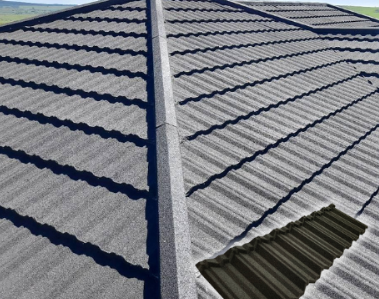
The balance between cost, quality, and scale does not come from a single decision. It is the result of long-term adjustments across sourcing, production planning, workforce structure, and market positioning. Industry observers often describe this balance as practical rather than theoretical. It is built step by step, shaped by experience, and refined through daily operations.
Why Cost Control Remains a Constant Daily Priority for Roofing Manufacturers?
In the world of roofing manufacturing, mastering cost control is far more than a strategy to offer the cheapest prices — it's an essential survival skill that allows companies to navigate turbulent market conditions, unpredictable shifts in customer requirements, and volatile raw material prices. Particularly for Chinese roofing manufacturers, cost management is not treated as a periodic campaign or a static target; it is regarded as an enduring, day-to-day discipline that permeates every level of the organization.
The strongest manufacturers embrace a thoughtful, multi-layered method of cost management. They concentrate on making careful, incremental enhancements across the full production cycle — selecting materials with precision, optimizing workflow and production rhythm, utilizing labor intelligently, and refining logistics and delivery processes. This steady, widespread attention delivers dependable cost reductions over time, all while safeguarding product consistency and timely fulfillment.
At the same time, experienced manufacturers consciously avoid drastic or one-sided cost-slashing. When reductions are pushed too aggressively, they commonly trigger problems such as inconsistent product quality, rising defect rates, slowed output, shipment delays, or dissatisfied clients. The roofing industry has repeatedly witnessed how prioritizing short-term savings over stability tends to create far greater long-term damage — lost customer loyalty, weakened reputation, and ultimately much higher overall expenses.
To sustain effective, risk-balanced cost control, Chinese roofing manufacturers regularly turn to these trusted, time-tested practices:
- Developing enduring, reliable partnerships with key raw material suppliers to secure more predictable pricing and assured, stable supply
- Practicing bulk procurement and strategic forward purchasing to cushion against sudden, sharp rises in material costs
- Conducting ongoing internal monitoring, data tracking, and systematic reviews to promptly identify and eliminate waste, rework, and other forms of inefficiency
- Organizing production schedules with precision to ensure continuous, smooth operation of equipment and lines, thereby minimizing expensive downtime, excessive changeovers, and idle periods
| Cost Area | Common Industry Approach | Practical Outcome |
|---|---|---|
| Materials | Stable sourcing relationships | Reduced volatility |
| Labor | Task-based allocation | Better efficiency |
| Production | Planned batch runs | Lower unit cost |
| Logistics | Regional coordination | Fewer delays |
This layered approach allows manufacturers to manage cost without turning it into the only priority.
How Do Manufacturers Define Quality in a Scalable Environment?
Quality in roofing materials manufacturing is rarely treated as a single standard. It is often defined by consistency rather than complexity. Buyers expect materials that perform the same way across different batches, regardless of order size.
Chinese manufacturers often focus on repeatable processes instead of customized production for every order. This does not mean flexibility is ignored. It means flexibility is built on stable foundations.
Quality management usually centers on:
- Clear internal production guidelines
- Routine inspections at key production points
- Defined handling and storage practices
- Feedback loops from downstream partners
Rather than increasing complexity, manufacturers aim to reduce unnecessary variation. A stable process is easier to monitor, easier to scale, and easier to correct when problems arise.
| Quality Focus | Manufacturing Practice | Resulting Benefit |
|---|---|---|
| Consistency | Standard workflows | Predictable output |
| Stability | Controlled material flow | Lower defect risk |
| Traceability | Batch identification | Faster issue response |
Quality, in this context, is closely tied to control. The more predictable the process, the easier it is to maintain acceptable standards across growing volumes.
How Scale Guides Major Choices in Roofing Materials Manufacturing?
Scale influences nearly every important decision in the production of roofing materials. While increasing output brings clear benefits like reduced per-unit costs through economies of scale, it also heightens exposure — even small errors or inefficiencies that are easily corrected at lower volumes can quickly grow into major financial losses, quality failures, or reputational damage at higher volumes.
Rather than expanding rapidly or on speculation, seasoned manufacturers scale up gradually and deliberately. Additional capacity is added only when supported by consistent, proven demand, never in anticipation of orders that may not materialize. This prudent method avoids the burden of underutilized equipment, reduces financial risk, and removes any pressure to compromise on product suitability or quality just to maintain throughput.
When preparing to scale, manufacturers typically concentrate on these foundational elements:
- Modular facility designs that permit steady, step-by-step growth without requiring complete overhauls
- Structured training programs that equip the workforce in advance for increased production levels
- Inventory controls precisely matched to the real rhythm of output
- Proactive, synchronized planning with suppliers to guarantee timely delivery of materials at the expanded scale
In practice, scale is never chased as an independent objective. It serves as a carefully managed tool that, when applied wisely, strengthens cost consistency, upholds product quality, and ensures dependable delivery over the long haul.
How Manufacturers Make Cost Control and Quality Reinforce Each Other?
Cost and quality are often viewed as trade-offs, but in well-managed roofing manufacturing operations, they are closely interdependent. Sacrificing quality almost always inflates costs through greater scrap, rework, returns, warranty issues, and eroded customer loyalty. At the same time, uncontrolled cost increases erode profit margins and limit competitiveness.
The most capable manufacturers overcome this perceived tension by prioritizing genuine operational efficiency over dangerous shortcuts. True efficiency reduces costs while actively supporting — and frequently improving — quality levels.
Practical steps that drive this alignment commonly include:
- Simplifying workflows to remove redundant handling, movement, and process steps
- Redesigning layouts and material paths to sharply decrease waste and scrap generation
- Enhancing inter-departmental communication and coordination to avoid delays, miscommunications, and mistakes
- Maintaining consistent, clearly defined quality standards applied uniformly across every product line
These enhancements rarely depend on costly new equipment or elaborate systems. They result from disciplined daily execution, vigilant observation, and a persistent dedication to incremental improvement.
How Workforce Design Helps Sustain Balance at Every Scale?
The workforce stands at the heart of successfully balancing cost, quality, and scale in roofing materials manufacturing. Strong operations combine seasoned, skilled individuals with thoughtfully organized roles and responsibilities.
Instead of creating narrow, highly specialized positions that reduce adaptability, manufacturers emphasize broad competence within defined boundaries. Workers receive cross-training to manage a variety of related duties, giving production lines the flexibility to handle shifts in volume, product types, or unexpected changes without major interruptions or staffing upheavals.
Common workforce strategies that support this equilibrium include:
- Precisely defined roles and responsibilities to prevent confusion or overlapping duties
- Regular cross-training initiatives for critical positions to maintain versatility
- Long-term, stable team arrangements that minimize turnover and retain accumulated expertise
- Performance assessments that actively reward meaningful contributions to process enhancement
A steady, well-trained workforce yields substantial returns: reduced errors, more uniform quality, better responsiveness to demand fluctuations, and considerably lower expenses related to frequent recruitment, orientation, and retraining.
How Do Supply Chain Relationships Affect the Balance?
Manufacturers rarely operate in isolation. Suppliers, logistics partners, and distributors all influence cost and quality outcomes.
Chinese roofing materials manufacturers often emphasize long-term cooperation instead of frequent switching. Stable relationships reduce uncertainty and improve coordination.
Supply chain alignment typically focuses on:
- Predictable delivery schedules
- Clear quality expectations
- Shared problem-solving approaches
- Open communication during demand shifts
This alignment allows manufacturers to respond more smoothly to changes without sudden cost spikes or quality compromise.
| Supply Chain Element | Cooperative Practice | Operational Effect |
|---|---|---|
| Suppliers | Long-term agreements | Stable input quality |
| Logistics | Planned routing | Reduced delays |
| Distributors | Forecast sharing | Better output planning |
How Market Segments Guide Production Balance?
Different customer groups have distinct priorities when it comes to roofing materials — some emphasize low cost and high volume above everything else, while others place the highest value on premium appearance, exceptional durability, or precise customization. Rather than applying a uniform production strategy across all orders, experienced manufacturers intentionally divide their operations into separate segments tailored to these varying demands.
This deliberate segmentation makes it possible to:
- Select and fine-tune materials within clearly defined limits suited to each market segment
- Assign production time, equipment, and resources based on the specific nature of each order type
- Prevent conflicting requirements (such as ultra-economical runs and high-end specialty finishes) from interfering with one another
- Keep internal planning straightforward, focused, and much less prone to mistakes or confusion
By maintaining separate production approaches for different market segments, manufacturers greatly reduce internal friction, achieve more consistent results, and deliver orders with greater accuracy and reliability.
How Manufacturers Handle External Pressures in a Measured Way?
External challenges — whether sudden market volatility, changing customer expectations, new regulations, or raw material cost spikes — are a regular part of the business. Companies that react with sweeping, hasty changes often throw off their carefully established balance of cost, quality, and output.
The most seasoned manufacturers prefer to respond gradually and deliberately. They test potential adjustments on a limited scale first, protecting the stability of core processes while allowing room for thoughtful adaptation.
Common measured responses include:
- Conducting small-scale pilot runs to evaluate new materials, processes, or modifications
- Implementing temporary adjustments to capacity or scheduling to handle short-term pressure
- Performing targeted internal process reviews before deciding on permanent changes
- Engaging in early, collaborative conversations with suppliers to assess options and consequences
This careful, step-by-step approach preserves long-term operational steadiness while still enabling the flexibility needed to adapt to changing external conditions.
How Internal Coordination Sustains Long-Term Equilibrium?
Maintaining a healthy balance between cost, quality, and production scale depends heavily on effective collaboration across all departments — production, procurement, quality control, sales, and logistics must all pull in the same direction.
Rather than depending on elaborate software or rigid hierarchies, most successful manufacturers rely on simple, practical communication methods. Regular cross-team meetings, standardized reporting templates, and well-defined escalation procedures keep alignment strong.
Key elements of effective internal coordination typically include:
- Clearly communicated, shared production goals that everyone understands and supports
- Open, timely reporting of issues so problems are identified and addressed early
- Joint problem-solving across departments instead of isolated blame
- Ongoing, flexible adjustments to priorities rather than attempting to enforce unchanging rules
This straightforward clarity reduces misunderstandings, prevents minor issues from growing, and supports smooth, dependable day-to-day performance.
Why Balance Is Treated as a Never-Ending Daily Effort?
The right balance of cost, quality, and scale is never a permanent achievement. Customer preferences evolve, market conditions shift, raw material availability fluctuates, and internal capabilities change over time. Manufacturers who view balance as a fixed formula or a one-time milestone usually struggle when circumstances inevitably change.
The most resilient companies recognize balance as a continuous, living process — something actively maintained every day through consistent decision-making, clearly stated priorities, and steady, disciplined execution. They stay attentive, responsive, and adaptable without letting reactive overcorrections disrupt the operation.
In the roofing manufacturing world, the understanding is simple and widely shared: true balance isn't something you reach once and then maintain forever. It is carefully preserved every single day through thoughtful choices, clear focus, and unwavering commitment to long-term stability.

 Email:
 Phone:
 Adress: