



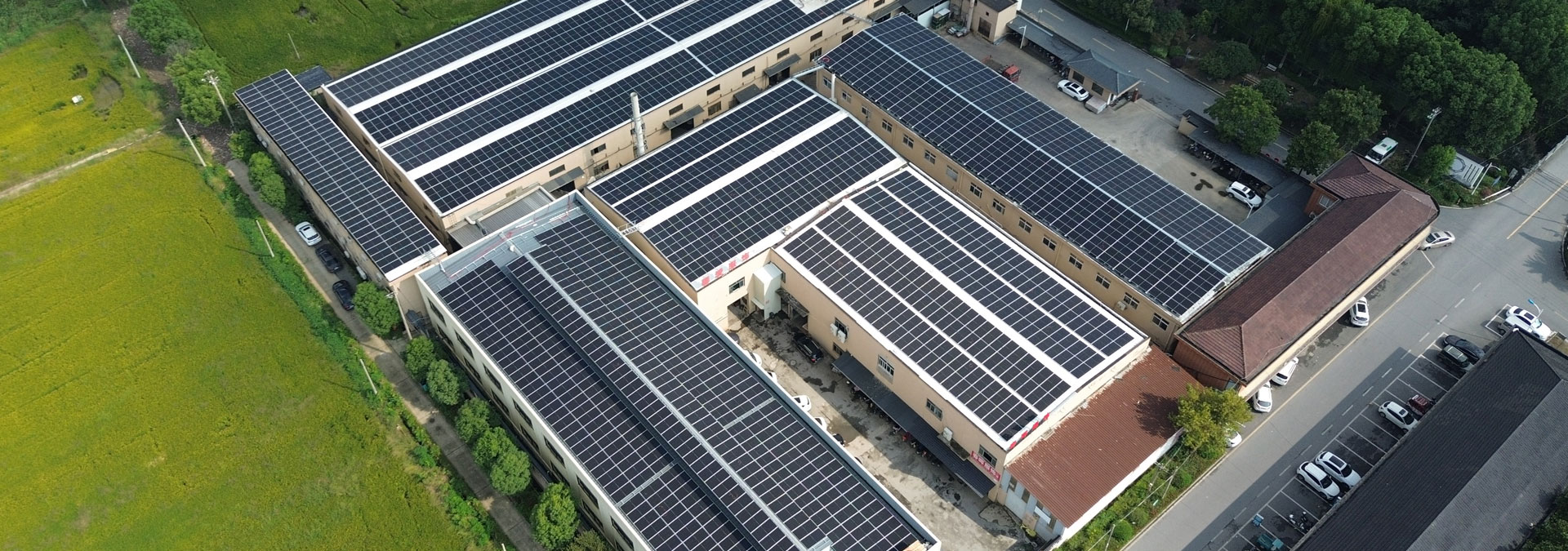
Roofing products that imitate the appearance of aged clay or ceramic tiles are often specified for projects that require a traditional visual character without the mass of fired-clay units. Material composition, profile geometry, overlap design and fixing arrangements determine whether such tiles will perform as expected under local weather and structural conditions. Vintage Roof Tiles and Antique Roof Tiles made from polypropylene therefore need to be assessed through documented specifications rather than by surface appearance alone. Understanding the polymer base, the formed shape and the installation interface allows a more reliable match between product and project.
Polymer Base Used in These Roofing Units
Polypropylene is a thermoplastic polymer chosen for its balance of stiffness, low weight and resistance to ordinary handling stresses. In roof-tile form the polymer is compounded and moulded so that the finished piece retains a defined profile and an embossed or textured surface that recalls historic tiles. Flexibility, impact behaviour and long-term outdoor performance depend on the precise formulation, including any stabilisers or fillers, as well as on the consistency of the manufacturing process. Technical data sheets are therefore consulted to confirm the actual composition and the properties claimed for the finished tile.
Principal Structural Characteristics of the Moulded Tile
Profile Geometry and Surface Detailing
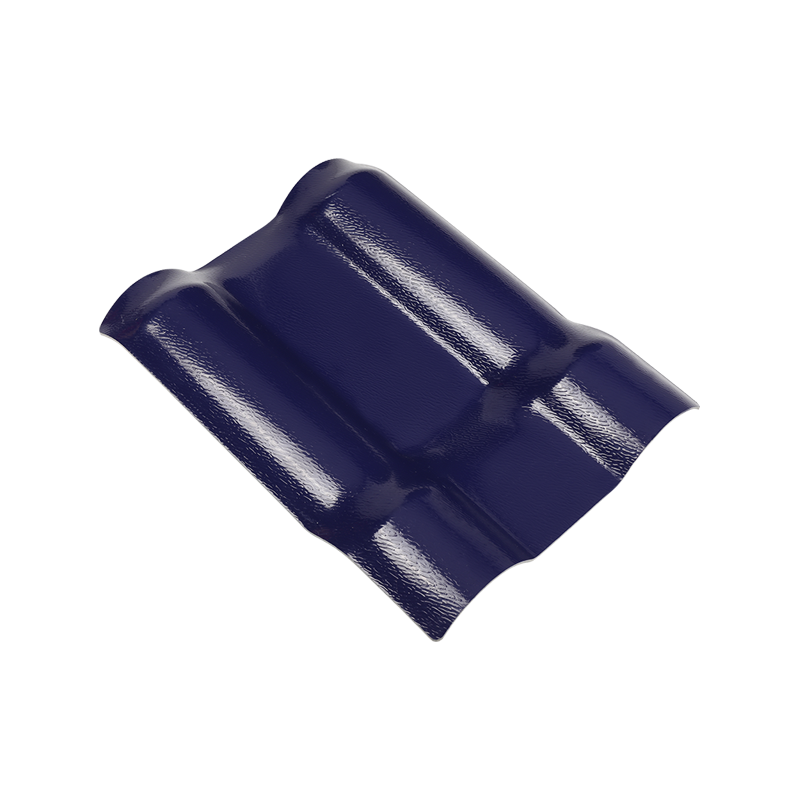
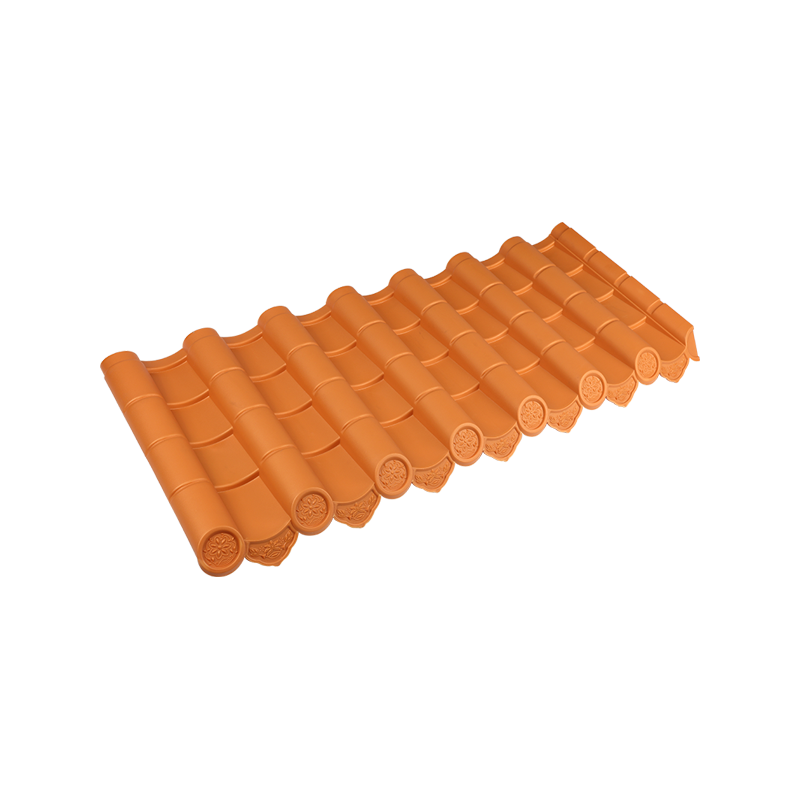
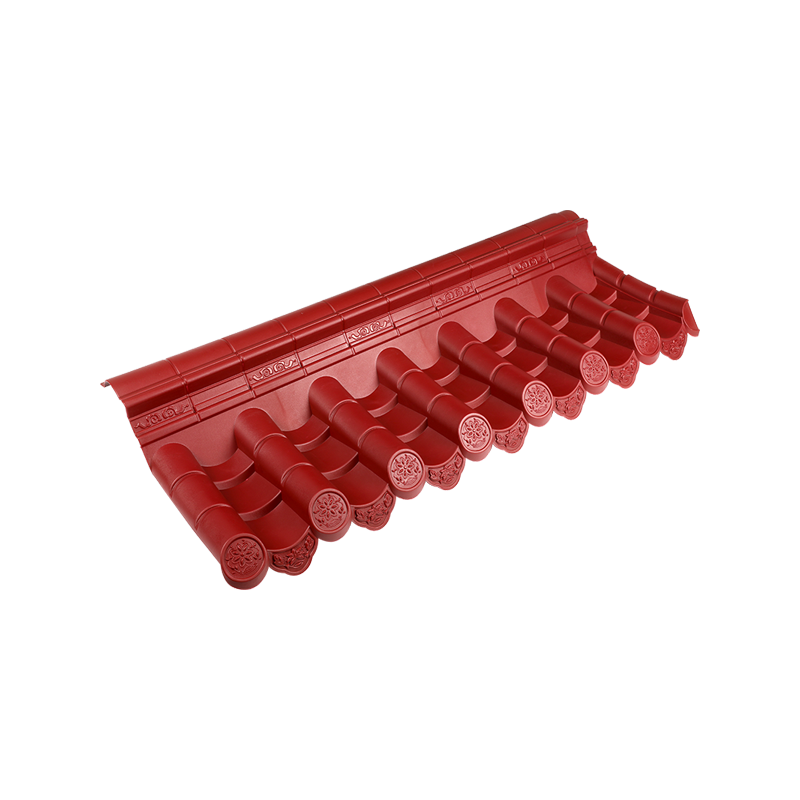
The cross-sectional shape of the tile governs both its silhouette on the roof and the way successive courses interlock. Antique-style surface texture—scale patterns, subtle undulations or simulated weathering—contributes to the desired historic appearance. Before ordering, the exact profile, the length and width of each unit and the range of available surface designs are verified against the architectural drawings and the visual intent of the project.
Edge Overlaps and Water-Shedding Paths
Adjacent tiles are designed to overlap at the sides and head so that water is directed down the roof slope rather than into the joints. The dimensions of these overlaps and the recommended laying direction are fixed by the product instructions; deviation can create gaps or reverse laps that allow water entry. The tile layer forms only one part of the roof assembly: underlayment, flashings at abutments and the overall drainage strategy remain essential to weather performance.
Fixing Locations and Attachment Method
Each tile incorporates designated points or zones through which fasteners pass into the supporting battens or deck. The type of fastener, the spacing between fixings and the sequence of installation are specified so that the tiles remain secure under wind uplift and thermal movement. Roof pitch, the stiffness of the supporting structure and the expected wind climate all influence whether the standard fixing pattern is adequate or whether additional restraint is required.
Overall Dimensions, Thickness and Unit Mass
Length and width determine coverage per tile and therefore the quantity needed for a given roof area. Thickness affects both the rigidity of the individual piece and the depth of the installed roof surface. Unit mass enters into the calculation of dead load on the roof structure and influences handling during installation. Actual measured values from the supplier replace any general assumptions about polypropylene roofing products.
Variables That Influence In-Service Behaviour
The documented formulation sets the baseline resistance to ultraviolet exposure, temperature cycling and moisture. Geometry, thickness and the integrity of the overlaps govern how the tile sheds water and resists wind. Installation quality—correct batten spacing, proper fastener engagement and adherence to the stated sequence—determines whether the designed performance is realised. Consistency of dimensions and surface finish from tile to tile further affects both appearance and the ease of achieving tight joints.
Comparison with Traditional Clay and Ceramic Tiles
Polypropylene tiles are substantially lighter than equivalent clay or ceramic units, which can simplify handling and reduce structural demand. Surface appearance can be moulded to resemble aged clay, yet the material remains a polymer and responds differently to impact, thermal expansion and long-term weathering. Installation methods diverge: clay tiles often rely on specific nib and batten arrangements, while polymer tiles follow the fixing pattern defined by their manufacturer. Maintenance expectations and the availability of matching replacements also differ. Any comparison is therefore based on verified data for the particular products under consideration, together with local load requirements, climate and regulatory constraints.
Quality Checks Prior to Commitment
Sample tiles are examined for surface voids, colour variation, flash or other moulding defects. Dimensions and thickness are measured against the published tolerances. Available test information concerning weather resistance and mechanical behaviour is reviewed. Where the destination market requires particular compliance documentation, those documents are obtained and retained. A trial installation of a small area confirms that the profile nests correctly with adjacent tiles and with the chosen underlayment and flashings before a full order is placed.
Matching the Product to Different Project Types
On residential roofs the profile and colour are coordinated with the wall finishes and the overall architectural style. Courtyard and heritage-inspired buildings place greater emphasis on the authenticity of the antique surface and on the available colour range. Commercial or landscape structures may prioritise visual uniformity across large areas, ease of installation and a clear maintenance plan. In renovation work the existing roof geometry, the condition of the supporting structure and the compatibility of new fixings with old framing are checked before the original covering is removed.
Importance of Complete Specifications in the Purchasing Decision
Appearance alone does not establish suitability. Dimensional accuracy, stated material properties, clear installation guidance and evidence of consistent manufacture together allow the buyer to judge whether a given antique-style tile will meet the structural and environmental demands of the project. Direct examination of samples and discussion of technical details with the supplier further reduce uncertainty before quantities are confirmed.
Overview of Structural Elements and Evaluation Points
| Structural or Material Aspect | Contribution to Roof Performance | Verification Step |
|---|---|---|
| Polymer formulation | Baseline response to weather and handling | Review technical data and composition statements |
| Profile and surface texture | Visual character and course-to-course fit | Confirm dimensions and design against drawings |
| Overlap geometry | Water shedding and joint integrity | Follow stated lap dimensions and laying direction |
| Fixing points and fasteners | Resistance to wind uplift and thermal movement | Match fastener type and spacing to instructions |
| Unit size, thickness and mass | Coverage, handling and structural loading | Measure samples; include mass in load calculations |
| Installation and quality consistency | Realisation of designed performance | Trial fit; check tolerances and surface uniformity |
Evaluating Polymer Antique-Style Tiles Through Material and Structure
Polypropylene composition, moulded profile, overlap design, fixing method and verified performance data together determine whether an antique-appearance roof tile is appropriate for a given building. Suitability depends on the complete roof system—supporting structure, underlayment, flashings and installation quality—as well as on the local climate. Hangzhou Chuanya Building Materials Co., Ltd. produces polypropylene roof tiles with antique-style surfaces. Review of material documentation, structural details, dimensional data and sample panels against the project's architectural and technical requirements allows selection of a tile that balances traditional appearance with the practical demands of contemporary roof construction.

 Email:
 Phone:
 Adress:
